

Article author: Iveta Bartošová
Even before a woman gives birth to her baby, she has many questions. After giving birth, there are even more of them. Breastfeed or not breastfeed, what diapers to use, how to dress the baby, how to put it to sleep, how to calm it when it cries for a long time, how to help it with a sore tummy, and so on. As parents, we are constantly dealing with various child-related challenges. One big challenge is definitely the first complementary foods, which bring a whole range of tricky questions - when to start, which foods to start with, whether to blend them or not, and so on. Let's take a look at it together.
When to start with the first complementary foods
For non-breastfed children, it is recommended to introduce complementary foods after the completed 4th month; for breastfed children after the completed 6th month. However, if the child shows interest in food earlier than the end of the 6th month, there is no problem offering food sooner.
It is good to keep in mind that children are called infants until the age of 1, which means that breastfeeding should predominate in their diet and they should be introduced to complementary foods by their first birthday. The aim of the first complementary foods is therefore not to replace breastfeeding, but to taste and explore.
For children on formula, it is desirable for the milk to be eliminated as soon as possible and replaced with regular food. So in this case, it is better when the child gradually replaces formula feeds with real foods before the age of one.

Foods for the first complementary foods
In the Czech Republic, it is most commonly recommended to introduce vegetables (pumpkin, zucchini, carrot), followed by meat (chicken, pork, rabbit), eggs, fruit (apples, pears, bananas), grains and legumes. But it is up to you what you start with, ideally with something you already like to eat at home, so it is not extra work for you.
In different parts of the world different foods are introduced, for example the Philippines - rice, Brazil - orange juice, the UAE - hummus, India - lentils and vegetables, Italy - pasta and parmesan, and in the end children eat everything, so whether you start with a banana, pumpkin or liver really does not matter. Ideally, however, you should introduce foods rich in iron (egg yolk, beef, liver, legumes, spinach, kale, oatmeal), because breast milk no longer contains as much of it as a 6-month-old child needs.
For some mothers it may be easier to have a list of foods that are recommended to be introduced gradually and then prepare complementary foods according to it. Others like the freedom to choose foods and introduce them according to what they happen to have at home. It is individual and we should not look for any science in it.

What is the BLW method
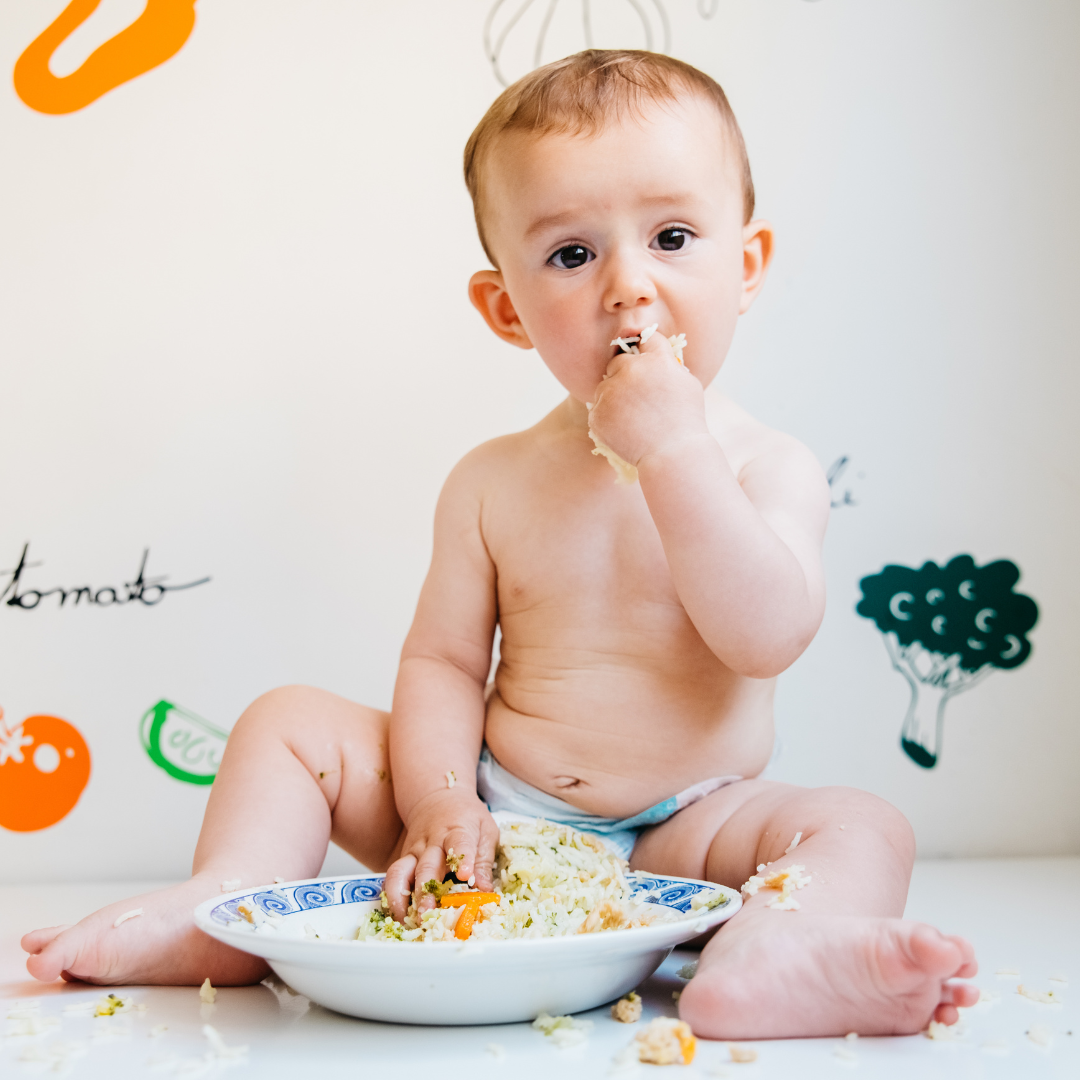
BLW, or baby led weaning, literally means food in the paw/food in the little hand. It means that the child takes from the table what appeals to them and gets acquainted with all sorts of shapes, tastes and textures by putting food into their own mouth; nobody feeds them. However, it is important that the food the child tastes is properly prepared, meaning soft enough for the child to mash it with their tongue against the palate and later against the gums before their molars grow in.
BLW can also be combined with spoon-feeding; the main thing is that both the child and the mother are happy. There are children who do not want blended food and would rather feed themselves only with what they see on the table. Other children have trouble with pieces even after their first year of life.
If you like food in the paw, keep in mind that non-sitting babies need to be fed either while lying on their tummy or in a kangaroo position, so that in case of choking or gagging the child can comfortably cough it out. Later you can move them to a high chair, but even for older children it is not advisable to use safety belts. These could be an obstacle when providing first aid.
Whether you decide to feed your child with a spoon and blended complementary foods or try BLW, in both cases you will find this useful:
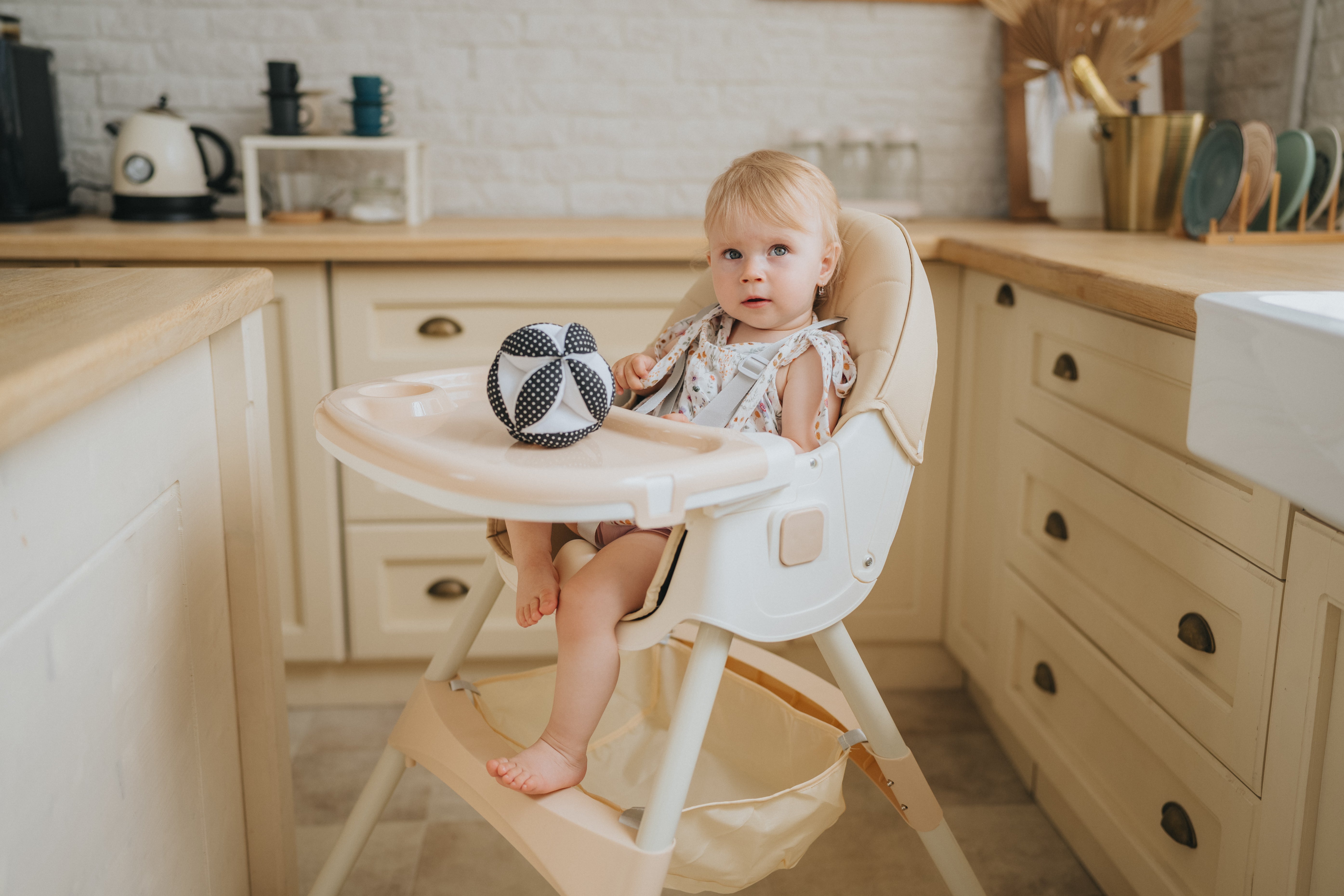
- children's high chair - a folding chair on wheels with a removable tray,
- children's dining set - beautiful bamboo tableware,
- the first baby spoon in the shape of a bird - suitable for various baby grips.

In short
Introducing the first complementary foods is not rocket science. Whether you choose spoon-feeding or the BLW method is entirely up to you, and combining both methods is also possible. For children on formula, it is recommended to introduce complementary foods after the completed 4th month; for fully breastfed children, only after the completed 6th month. The important thing is to watch for signs that the child is ready and not force them to eat when they do not want to. During the first year, it is more about becoming familiar with foods than replacing milk with food. Whether you start with pumpkin, an apple or pasta is up to you; in this case, your imagination is the limit.
How do you handle first complementary foods? Have you already started, or are you still looking for information? Will you feed with a spoon or try BLW?


Write a comment
This site is protected by hCaptcha and the hCaptcha Privacy Policy and Terms of Service apply.