

The moment when parents decide to leave their child with someone else for babysitting is very individual. Every mother has this need at a different time. Some children have been babysat by their grandmothers since they were babies, even overnight. But there are also three-year-olds who have never been babysat. So how is it with babysitting children - when to leave a child with a sitter, who to leave them with, and how often?
When to start leaving a child with a sitter
For children on formula, the situation is easier. For breastfed children, breast milk can be pumped and then warmed by the babysitter and given ideally with a cup or a finger feeder so that the breastfeeding technique is not disrupted. It mainly depends on the mother when she feels able to leave her child with someone else.
Between the 7th and 8th month, most children go through separation anxiety, which is a very demanding period for both mother and child and is not really ideal for babysitting. In some children this period lasts until age 3, in others it starts later, around 18 months, or appears again around the age of 2. So it also depends a great deal on the child's temperament.
Many children's groups accept children from 1 year of age, so this type of babysitting can also be tried, although it is more expensive. Expect to pay several thousand a month.
The answer to the question of when to leave a child with a sitter is therefore individual. It depends on whether the child can manage being separated from mom and dad and, if so, whether the parents are ready for it. Children can sense uncertainty and may behave hysterically when saying goodbye.
Who will babysit my child
Most often, children are looked after by grandmothers and grandfathers. It costs you nothing, except that if you haven't communicated boundaries with your parents about food, drinks, and parenting, they will do things their own way, which may not align with yours. Within the family, you can also try having your sister or sister-in-law babysit. It is also good to remember that babysitting by family members is not a duty for anyone. There are grandmothers who look forward to babysitting, but there are also grandmothers who still work and lead active lives, so they don't have much time for the younger generation, or on the contrary they are already old and don't dare to babysit. Grandmothers also often live in another city or in the countryside, dozens of kilometers away, so babysitting would be very complicated or even impossible.
Another option is babysitting at a friend's house, who also has children. It is a great way to help each other out with a friend. One time she babysits, the next time you do. Alternatively, you can find more moms in your area and create a babysitting community. Each day the children can spend time at one mom's house and help each other this way.
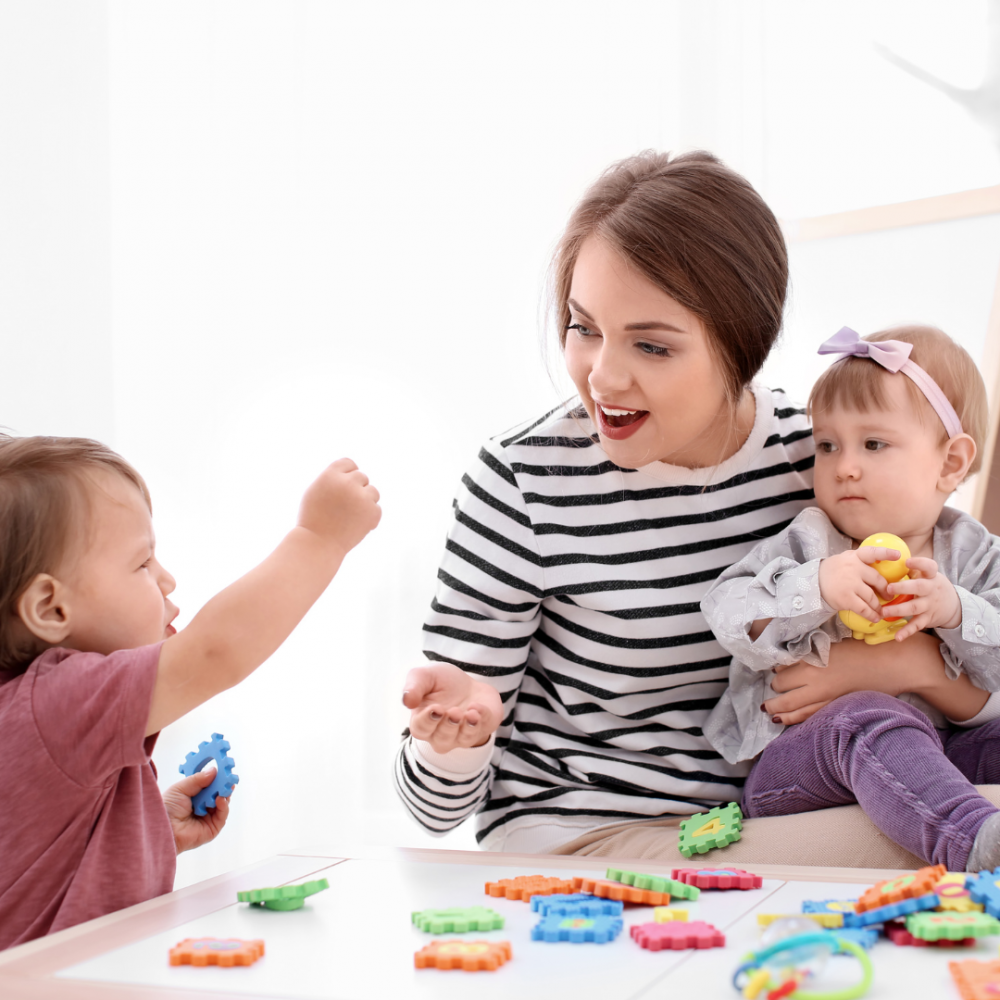
Many mothers use a babysitter/nanny. You can arrange both occasional babysitting and regular care with them. Some of them will also look after the child overnight. Everything depends on agreement, and it is best if you vet the “sitter” and get to know her before the actual babysitting starts.
In most cities, there are parent centers and playgroups that, besides a public playroom, also offer babysitting. If you go there regularly to play, babysitting there will probably be trouble-free.
From 1 to 3 years old, it is possible to place a child in a children's group. This is regular care, from 1 to 5 days a week, either just in the morning or for the whole day. Groups often have a maximum of 12 children. Financially, this is the most expensive option, but if the child can manage separation in a group and the family can afford it, then it is a great solution.
Frequency and ways of babysitting
Nowadays, it is possible to agree on almost anything. Children can be looked after:
- regularly one or more days a week - most often because of returning to work;
- regularly every morning/afternoon - again because of work;
- regularly once a month - for errands such as hairdresser, manicure, pedicure, massage, etc.;
- occasionally - when mom needs to go to the doctor, run errands, or has a sick child and has to be at work.
The most common places where a child can be babysat are:
- babysitting at the child's home - a safe space for the child, though familiar and seen before;
- babysitting at the sitter's home - a new space to explore;
- babysitting outdoors - at a playground, on a trip, at a swimming pool, etc.;
- babysitting in a children's playroom.
Babysitting children is a big topic, and every mother sets this boundary differently. We should therefore not judge babysitting babies at a very early age, nor the fact that a three-year-old child or its parent does not want it to be babysat. Let us always act according to our intuition. If we need time for ourselves and our partner is unavailable, there is nothing wrong with taking a few hours off from the children, recharging, and returning with renewed energy and enthusiasm for parenting. And if the child doesn't want it right now, is acting out during separation, crying constantly, or even vomiting, then give them more time and you'll see that one day the moment will come.
Your children won't be hanging on your leg until puberty; they just need you more right now than you think. In a few years, when they grow up, the situation will be completely different and perhaps the opposite, with them pushing you away, and it would be a shame to waste that time.



Write a comment
This site is protected by hCaptcha and the hCaptcha Privacy Policy and Terms of Service apply.