

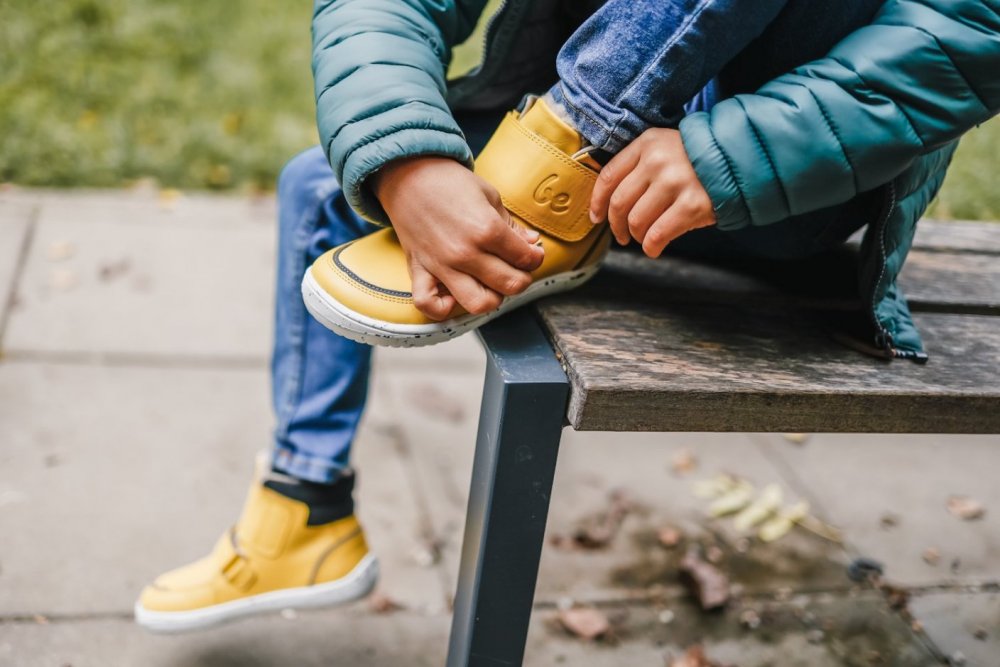
Barefoot means bare foot in translation. When we talk about barefoot shoes, these are shoes that simulate walking barefoot. Today, there are many brands on the market, beautiful colors and designs, and it is also possible to buy sneakers, athletic shoes, hiking boots, winter boots, ballet flats, formal shoes for a dance, sandals, wellingtons, boots, snow boots, slippers, sock shoes, and water shoes. So why is conventional footwear not suitable for children, and what are the benefits of wearing barefoot shoes?
Why conventional footwear is not suitable for children
Conventional footwear is not always bad; however, most shoes have these common features:
- they have a narrow toe box, so the toes are compressed and do not have enough space to move naturally while walking;
- because of the narrow toe box, foot deformation occurs, the arch drops, the toes twist, and the big toe turns inward;
- the sole is thick, stiff, and usually has a heel, which causes the foot to lose contact with the surface and the whole body to shift out of alignment; the feet become flatter.
Benefits of wearing barefoot shoes
A child's foot is still developing, and possible contraindications such as flat feet, diabetic foot, or heel spurs affect almost no children, so barefoot shoes should not be an obstacle to wearing them. Why get barefoot shoes for children:
- they simulate walking barefoot;
- the shoes are soft, thin, and light, yet at the same time they protect the foot from injury, cold, and dirt;
- they are wider and do not press on the toes, do not interfere with foot development, and naturally strengthen it;
- thanks to the thinner sole, walking results in a massage of the feet;
- they are made in different shapes - wider, narrower, narrow heel, high instep, etc.;
- most children do not wear through the shoes, so they can be passed on to another child.
When to put barefoot shoes on our children
For the first independent steps, children's pre-walkers are suitable. After at least 3 months of independent walking, you can get your child their first real barefoot shoes.
If you already have an older child who has never worn barefoot shoes, then you should be careful when putting them on. The child is not used to this type of shoe, and if you changed their shoes without letting them alternate at first, it could cause sore heels (a different gait), back pain, and even headaches. It is therefore a good idea to transition to barefoot footwear gradually. You can start with barefoot shoes in summer, when the child has the opportunity to go outside barefoot and get used to the new stimuli that come when they are not wearing a thick sole.
Shoes are often more expensive than regular conventional shoes; however, what better thing to invest in than your health, because everything starts with the feet.


Write a comment
This site is protected by hCaptcha and the hCaptcha Privacy Policy and Terms of Service apply.