


It may seem that attachment parenting is just a modern invention, but the opposite is true. Even before the invention of strollers and the move to placing children in cribs, attachment parenting was completely natural and in most countries of the world it still is (South America, Africa, and Asia); it is just called parenting. What are the principles of attachment parenting, and why can we raise our child differently?
What attachment parenting is
The goal of attachment parenting is a stronger bond between mother and child, based on greater physical contact and touch, empathy on the mother’s part, and the ability to respond to her child’s needs. This approach to parenting is based on naturalness and does not mean that if a mother does not follow all the defined principles, then she is doing something wrong. It is all about finding the right balance between mother and child so that both feel good about it.
Principles of attachment parenting
Bonding with the baby after birth
Bonding with the baby is very important immediately after birth, but that does not mean that if it did not happen, for example because of an emergency or planned cesarean section (fortunately, more maternity wards today are inclined toward bonding even after a “C-section,” or the father can bond instead), then everything is lost. Bonding can also be made up for in the following days, when the mother places the baby on her bare chest and lets it find the breast and latch on. Together they then lie there, get to know each other, and tune in to one another
Breastfeeding on demand
Breastfeeding on demand should be a given. Unfortunately, in many maternity wards, although they claim to support breastfeeding, feeding at set intervals is still enforced, along with weighing before and after feeding. But not all babies drink enough milliliters of milk to then sleep for three hours and nurse again enough after waking.
It is completely natural for a baby to drink less and want to breastfeed more often, or to drink nothing at all (many mothers see no increase on the scale and get nervous that the child is not thriving) and to latch onto the breast only for contact and security. So breastfeed whenever your baby asks for it.
You can read about how not to ruin breastfeeding in the early days in this article.
Co-sleeping
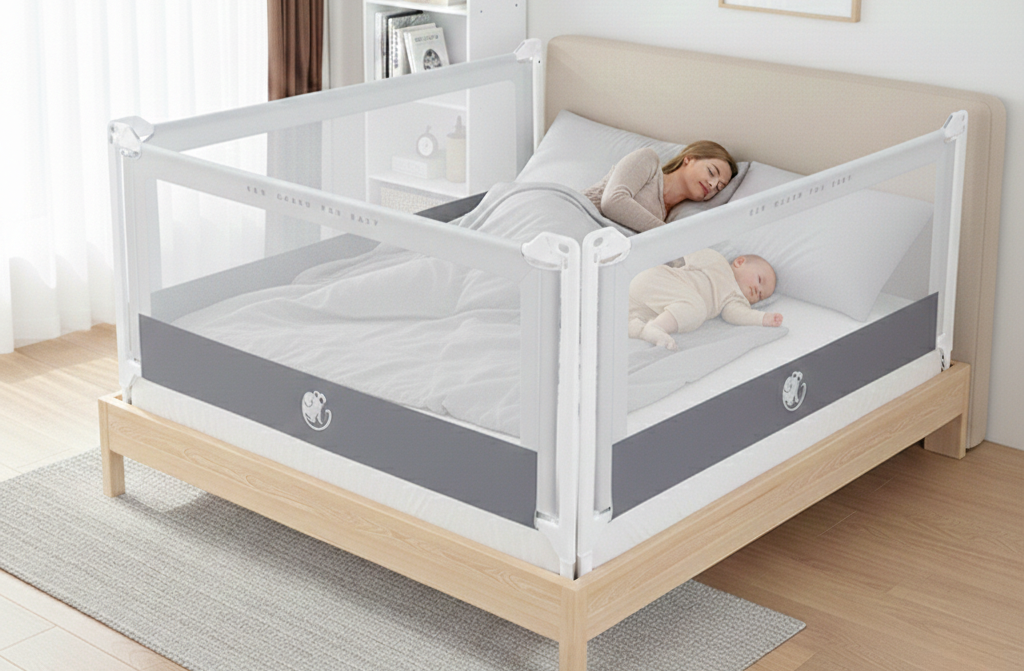
Nothing is more natural than co-sleeping as a whole family. Very few people enjoy falling asleep and sleeping alone. Yes, there are children who need their own space and quiet in the room. We can provide that for them even if you sleep in one large bed or have a crib pushed up against the big bed without one side rail.
Co-sleeping makes night nursing much easier, because the mother does not have to get up to the crib, so she does not wake as much and simply pulls the baby close while lying down; most of the time the baby nurses half asleep and falls asleep again. If co-sleeping works for you, practice it. If the baby is happy in the crib with all the side rails, that is fine too. Alternatively, you can put the baby to sleep in the crib and take them into bed for the second half of the night. Trust your maternal instinct.
A child always has a reason for crying
A child cannot manipulate through crying; crying is their only means of communication, through which they express that they have a need. Crying does not necessarily mean a sore tummy or a full diaper either. We wrote more about babies’ crying in the article A newborn’s crying does not automatically mean a sore tummy.
Tuning in to the child’s needs
Whether it is the need to breastfeed or to eliminate, if the mother is attentive to the child and can tune in to them more, then she has no problem meeting the needs the child is asking for. The child will be much calmer and happier when they know that their mother notices them and does not overlook their current needs. She will not let them cry it out just because that way they will become more independent and sleep better. Yes, it can be a demanding period, but you will see that the child will later give it back to you, because they will know that you love them unconditionally.
Elimination communication
The diaper-free communication method relates to the previous point: the mother is tuned in to the child and, based on their signals, knows when the baby needs to pee or poop. Elimination communication is a great prevention for tummy pain, and it also means you will need only a minimum of diapers. You can read more about this method in the article Diaper-free communication method.
Carrying the child
Carrying strongly strengthens the bond between mother and child. By releasing hormones, it helps with milk production, and the child adapts better to the world. If your baby cries in the stroller, or if you have an older child at home who also needs your attention, carrying the baby will make life much easier for you at home and outside it. And don’t worry, carrying will not spoil your child.
Physical contact
By contact, we do not mean only carrying or breastfeeding, but also, for example, a baby massage, which is very beneficial for easier falling asleep or when the tummy hurts. Whenever you feel like it, touch your child, cuddle them, give them loving arms, even when they are upset or angry.
The child is not the top priority
It may seem that in attachment parenting we mainly prioritize the child’s needs and ignore our own. No, the mother also needs to recharge and do things that she enjoys and that fulfill her. Whether it is a massage, yoga, a cup of hot coffee, sewing, or a walk in the woods. You can recharge on maternity leave in many different ways, and if the mother has support from other family members, she should use it whenever she needs to (childcare, household cleaning). Alternatively, you can recharge when the child is asleep; cleaning can definitely wait. What matters most is family well-being and not pushing the partner into the background. The relationship between parents also needs to be strengthened so that everyone, children included, can function together in harmony.
Inner boundaries
Setting inner boundaries is very important for both parents and their children. Thanks to these boundaries, it is possible to function in a mutually respectful relationship without punishment. Then it will not happen that the child is spoiled and unruly, nor that they will be afraid of you and, out of fear, do anything you want. In addition, boundaries make life more secure, because the child will know from where to where they can allow themselves what.
If parents do not follow all the principles of attachment parenting, that certainly does not mean they are not attachment-oriented. Sometimes bonding simply does not happen immediately after birth, the mother cannot breastfeed or carry in a sling for health reasons, but that is okay. Attachment parenting is about meeting the child’s needs whenever necessary, about mutual contact, and about unconditional love. So act according to your maternal intuition, and even if those around you try to convince you otherwise, do not be swayed. You will see that your child will grow into an empathetic, respectful, and loving person who can express their opinion and will not get lost in the world easily.



Write a comment
This site is protected by hCaptcha and the hCaptcha Privacy Policy and Terms of Service apply.