

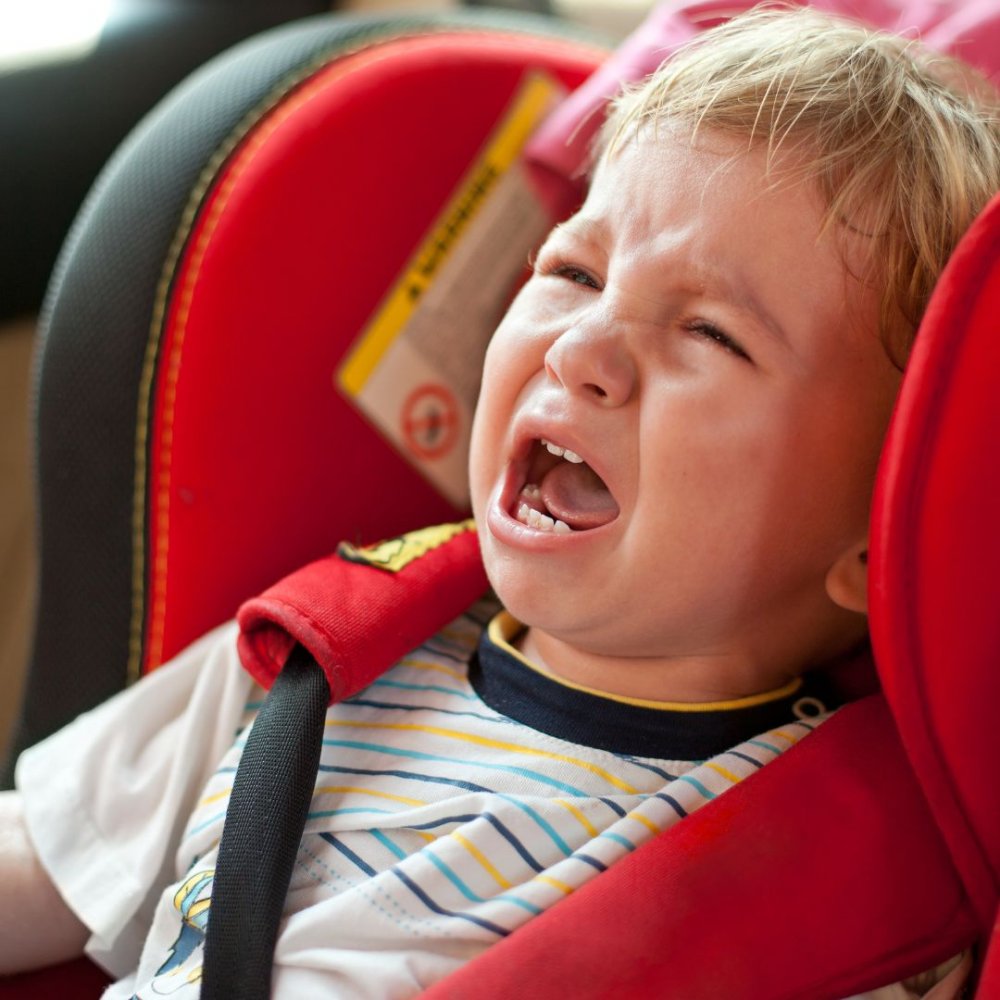
It might seem that riding in a car is a cure-all for sleepless children and that they all fall asleep in it without any trouble. But the opposite is true, and unfortunately car rides with a child are not a relaxed experience for all parents. Even if it sometimes seems like the child is doing it on purpose, especially when you have no time or energy, don’t be angry with them, because they always have a reason for crying, we just don’t always know it. So why do children usually cry in the car, and what can we do about it?
Possible reasons for crying in the car
There are many reasons discussed online, and since every child is different, there is no universal solution. Most often, a child cries in the car because:
- they are hungry - ideally breastfeed before the ride, or make a stop on a longer trip; for older children, take a snack with you;
- they are thirsty - especially in the summer months, it is important to replenish fluids regularly;
- they are too hot, their back is wet - try functional clothing or fewer layers (especially in colder months, keep in mind that a dressed child can overheat in the car seat), and for summer get a cooling insert for the seat;
- they need to pee or poop - children who are used to the elimination communication method or who poop into an unwrapped diaper may have trouble in the car;
- a clothing tag is scratching them or the harness is too tight - this is not common, but it can happen with more sensitive children, so it’s better to check before the ride that everything is okay;
- the sun is shining in their face - get a sunshade for the car;
- they feel lonely - if possible, it’s nice if the passenger sits next to the child in the back (they can hand over food or drink, show toys, stroke them, hold their hand, etc.), or you can get a rear-view mirror so the child in the infant seat can see the driver; alternatively, if the airbag can be turned off, put the infant seat in the front passenger seat (the child will see you, and you can stroke them);
- they feel sick (motion sickness) - in this case, you can try giving the child some medicine for nausea (e.g. Kinedryl) or try homeopathic remedies;
- they are bored - take something along to keep them entertained (toys, books, you can play a fairy tale or songs);
- they can’t fall asleep - more sensitive children are distracted by the changing scenery outside the window and have trouble falling asleep without issues; you can try darkening the windows or drive during wake windows rather than nap time;
- they are restricted in movement, can’t see outside, and may be anxious about the cramped space - this may be related to birth (you can go with the child to osteodynamics and remove certain blocks);
- it smells bad in the car - older children will only tell you this, and there isn’t much you can do about it; it’s simply the “scent” of the car;
- they want to climb into the seat by themselves - a toddler needs to climb into the seat on their own, so you can support them in that, ask whether they need help, and wait until they are settled.
What else can you do to help a child manage car travel?
It is not always possible to figure out why a child cries in the car, and some children are capable of crying through an entire long journey until you take them out of the seat. We know it, it’s demanding and exhausting. Usually, children who do not tolerate a stroller also do not like riding in a car seat. You can also try:
- rear-facing driving - for many children, moving to a rear-facing car seat helps, but it is not a rule;
- a pacifier - for children who use a pacifier, it helps to have one ready for the car ride, ideally on a string so it doesn’t fall to the ground and the child can put it in their mouth whenever they want;
- traveling in another way than by car - if possible, you can try another means of transport - public transport around the city, a bus or train for longer trips (the train is definitely better; you can walk around on it, which toddlers and older children will certainly appreciate);
- breastfeed before the ride - some children need to breastfeed before a trip, not so much because of hunger, but rather because of the separation that is about to happen (you can nurse the child on your lap and then put them in the seat, or breastfeed in the car seat, which is a bit of an awkward position; however, if the child falls asleep while doing so, you do not have to move the child to the seat and can set off right away).
Traveling with children can be truly demanding, and sometimes you need to wait until the child matures enough and starts tolerating car rides. However, this is an individual matter, so try our tips; we believe that one of them will work. We wish you peaceful travels and steady nerves on more challenging journeys.



Write a comment
This site is protected by hCaptcha and the hCaptcha Privacy Policy and Terms of Service apply.