

Buying toys has become a trend lately. Today, toys are no longer given only for important occasions like birthdays, name days, or Christmas, but also for Children’s Day, Easter, St. Nicholas Day, as a reward for a report card, after a visit to the dentist, or just because. And when you go to a friend’s house for a visit, it is only proper to bring something for her child too, so you bring a little gift that is sure to please. But when a child suddenly has so many cheap toys that break within a week, they no longer know what to do with them. This way of showing love is not good for children at all, and many times they would rather appreciate time spent with their parents at home, in nature, on a trip, doing household activities, simply together and mindfully. So what is it really like with all these toys, and why do children not need rooms full of them?
Chaos and stress
A large number of toys leads children to chaos, and they then tend to be stressed and don’t know how to play with them. Most of the time, they just scatter them around or lay them out next to each other so they can at least have some control over them for a while. Then they don’t want to put them away, because they feel it is beyond their abilities. Instead, they would rather run to the tablet and TV so they don’t have to deal with the chaos they have in real life.
They distract and get in the way of play
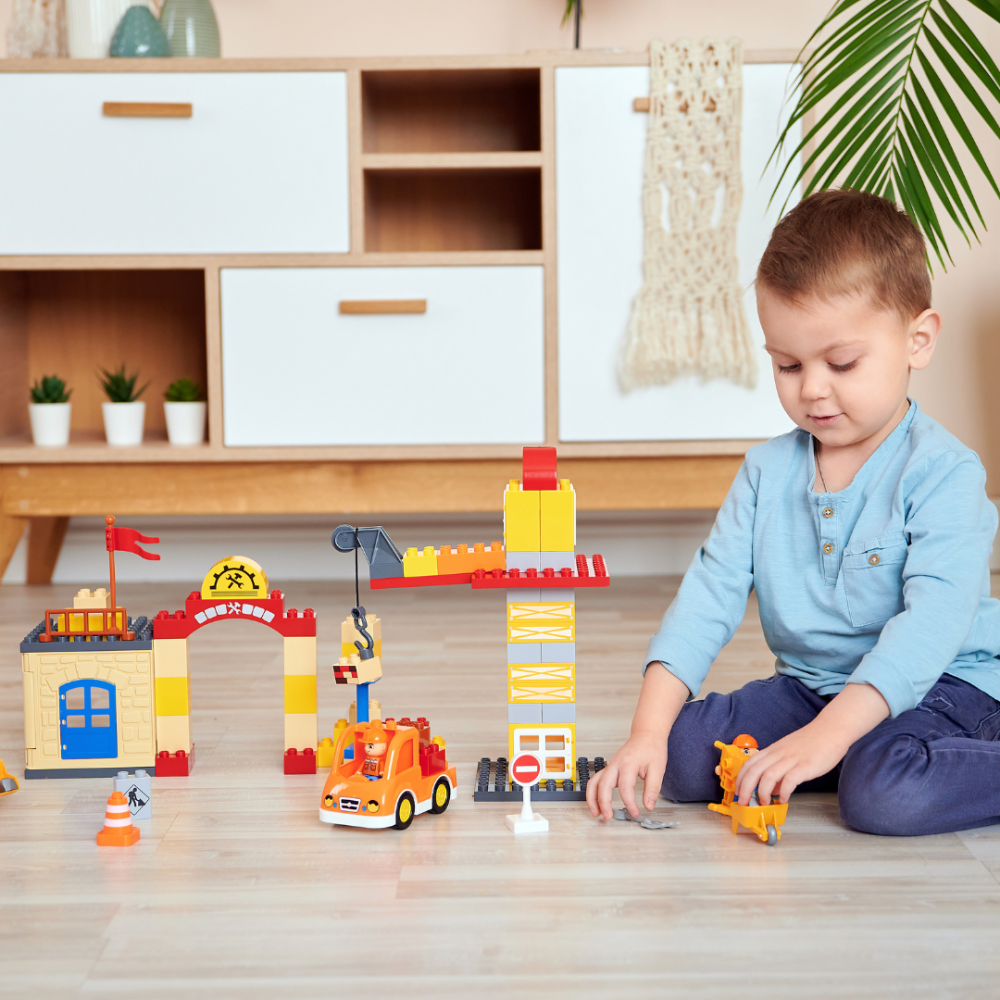
Too many toys prevent children from focusing on play. They take one toy after another and don’t play with them long enough to become fully immersed in play, which is a great shame. At the same time, the toys lie all over the room or even all over the apartment/house, and children then have no room to move freely; in short, it paralyzes them, and in the end they get bored.
Children are less creative
Many toys take away children’s creativity, their natural ability to come up with interesting activities using toys. At the same time, they prevent them from discovering other activities such as reading and looking through books, drawing, writing, etc.
There is no bond with the toy
If a child has more toys than is desirable, they do not form any bond with them and value them less. As soon as a toy breaks or gets lost, they demand a new one. In short, they treat it as a consumable item.
The best toys are the ones that aren’t toys
Especially with toddlers, who explore the world with all their senses, we can observe that they are not very interested in toys and would rather play with things we commonly have at home. Whether it is toilet paper, a sock drawer, or a broom and dustpan, children simply enjoy that much more than all kinds of flashing and noisy toys. In addition, they learn by imitation, so they want to do the same things we do. If we are sweeping, mopping, or cooking, they want to do that too, and for us it is the best time to involve children. Yes, it won’t be perfect, and there will probably be more mess around the child, but the child will be happy and will gradually improve at the activity.
How many toys is just right
With fewer toys, a child builds a deeper bond, and the simpler they are (non-interactive), the more they awaken imagination. So what is a sufficient amount? If you take away, say, a third or even half of a child’s toys and they don’t even notice, that means they have too many. If they don’t mind broken toys or the fact that they are aggressive toward some toys, then they still have too many. If you don’t know what to get a child for a birthday, what would make them happy, what they long for, then they really have too many toys and it would be good to reduce the number.
According to the American parenting expert Kim John Payne, the ideal amount is enough for a child to put all the toys away in five minutes, which is roughly ten to twenty toys.
Regular sorting of toys will benefit children
It helps children a lot if you regularly sort toys, hide some away, and rotate them so that they only have a manageable number in sight—one they are able to play with. Throw away broken toys right away and avoid buying this type. Toys the child has not played with for a long time can be given away, the better ones sold at a garage sale, or passed on to a younger sibling. If you have space at home, you can simply put some toys away and after a few weeks or months give them back to the child and hide others instead. It will look as if the child has new toys, and they will enjoy playing with them much more than if they were getting in the way in the room for half a year.
What next?
Tell everyone in your family that you do not want to have so many toys at home, and if they want to buy something for your children, ask them to consult you first. Alternatively, they can chip in for a more expensive, but higher-quality toy that will last and can even be passed on to other children after a few years. Or you can make toy shopping easier by opening a bank account where they can send money for your children, and then you can use it to buy necessary things like clothes, shoes, pay for swimming lessons, tennis lessons, or a trip or vacation, which children will appreciate much more than the fortieth car or thirtieth stuffed animal.
Our parents and grandparents did not have it easy; overall, they had very few things, and the toys they wished for usually did not even arrive, or they waited for them for years. Today, unfortunately, we have too much of everything, and that is not good either. What matters is realizing this and stepping out of that familiar cycle to create your own rules. You will see that the air in your home will feel lighter, and the children will be happier. We’re keeping our fingers crossed for you.



Write a comment
This site is protected by hCaptcha and the hCaptcha Privacy Policy and Terms of Service apply.