

Article author: Iveta Bartošová
Starting kindergarten or school brings a lot of the unknown. Ahead of time, we don’t know whether the child will like it there, what friends they will make, what they will enjoy doing, or whether they will get along with the teacher. The only thing we can do is talk to the child honestly, not lie to them that everything will always be great, and prepare them as well as we can. What should a child be prepared for, and what should they be able to do on their own?
Preparing for a different routine
A future first-grader has an advantage over a three-year-old in that they have already been attending kindergarten for at least a year and can imagine what a school routine will probably look like. Even so, a child starting school should be prepared for the change at the end of the holidays, ideally by moving bedtime earlier, since it is usually later during the holidays, and setting an earlier wake-up time so it is not such a big shock for everyone.

Encouraging independence
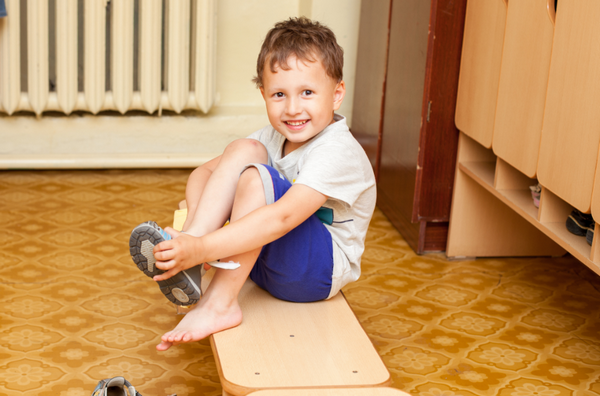
This mainly applies to children starting kindergarten, who are still learning everything and not everything comes easily to them yet. It’s great if you guide them toward independence with eating and drinking. That is, the child should be able to drink from a cup/glass on their own and eat with cutlery by themselves. At the same time, they should be able to say they need the toilet or go there on their own, and then carry out the necessary hygiene. And last but not least, they should be able to get dressed themselves, or at least partly. Comfortable clothing without buttons, looser sweatpants, a pullover that goes over the head rather than a zip-up hoodie, Velcro shoes, or mittens without fingers (mittens) will help with that.
Shopping together
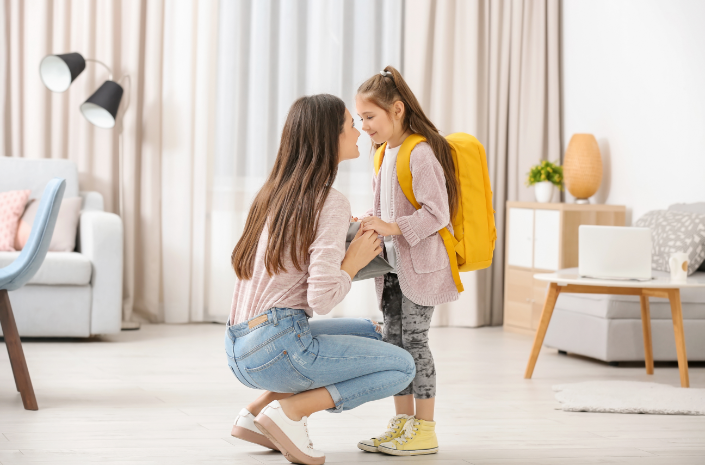
A child will be more motivated to start school/kindergarten if you go shopping together for the necessary items that they can choose themselves. For kindergarten, this might include pajamas, slippers, rain boots, a raincoat, a cup, or clothes for the classroom. For school, then a backpack, pencil case, colored pencils, a water bottle, and a lunchbox.
At home, you can also choose name labels for clothes and shoes, and stickers for school supplies together. The child can pick a picture to have by their name and the color of the labels, so they can recognize their things more easily.

Talking and playing
You can also prepare your child for starting school/kindergarten by talking together about everything that awaits them and what they can look forward to (different toys, new friends, trips, the playground, learning new skills, etc.)
Together, you can make a calendar with the days of the week and stick on what happens on each day. For example, that Monday to Friday is school/kindergarten and on Saturday and Sunday we are at home/go on a trip, etc. The child will then have a better sense of when they are home and when they are not.
What helps children most is when you play school/kindergarten with them. You can use all kinds of stuffed animals, dolls, figures, anything you can think of. The game can start with getting up for school/kindergarten and end with being picked up after lunch, after nap time, or in the afternoon after the second snack/after-school care. Through modeling situations in play, you can show the child clearly what the day will be like, how you will say goodbye, whether you will create some shared morning or afternoon ritual, something the child can look forward to.

In short
Holidays are usually in a looser routine, but starting school/kindergarten requires a different, regular routine. So it is important to prepare for an earlier bedtime and then an earlier wake-up time. It’s also great if the child can be more independent in self-care before starting, so they can manage to eat, dress, go to the toilet, and wash their hands on their own. Shopping together for school/kindergarten equipment can help the child feel safer in an unfamiliar environment. But the most valuable thing for the child will be if you talk to them about what awaits them at school/kindergarten and play together, modeling specific situations such as getting up in the morning, having breakfast together, leaving, a goodbye ritual, activities at school/kindergarten, snack time, lunch, etc., which will help them understand the flow of the school/kindergarten day more easily.
Did you do any preparation for starting school/kindergarten? What was most important for you?


Write a comment
This site is protected by hCaptcha and the hCaptcha Privacy Policy and Terms of Service apply.