

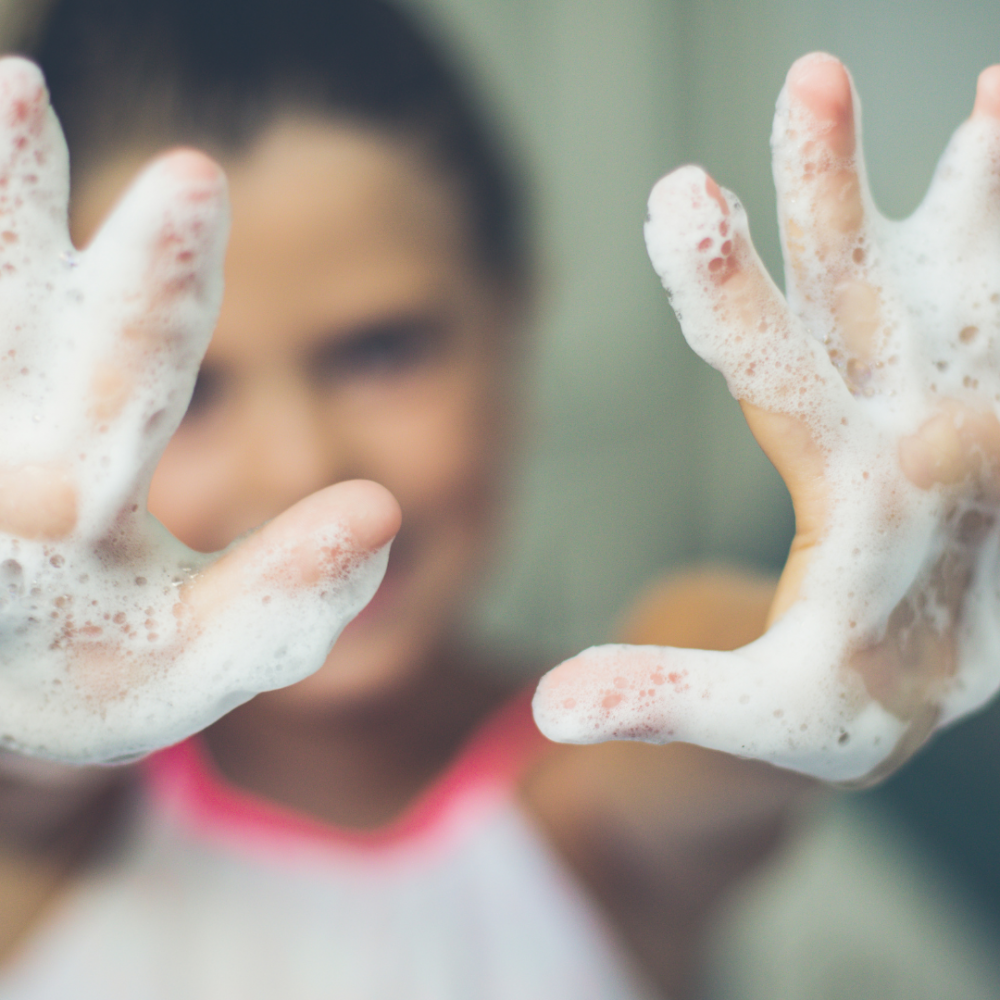
Handwashing should be part of our everyday activities. We most often wash our hands when we come in from outside, when we go to the toilet, when our hands are dirty, before eating, etc. For us adults, handwashing is a routine matter, but how do we teach it to our children too, so we don't have to keep reminding them and they can do it themselves?
Prepare a suitable environment for the child
- Make sure the child can reach the sink by getting them a stool.
- The child should be able to turn on the water by themselves. Some taps are short, and even with a stool the child won't reach them. In this case, you can tie a wooden spoon to the tap, for example.
- It is necessary to practice using soap with the child. The easiest for them will probably be touchless soap, under which they just put their hand. With regular bar soap, it will be more difficult, but the child can still manage it if the soap is small enough for their hands. The hardest thing will probably be pressing liquid soap out of a pump, which will require both hands at once, and they will most likely only be able to do it on their own when they are older.
Motivation for handwashing
- The child will be more willing to wash their hands with a soap that they choose themselves in the store. However, make sure the soap is not too big (in the case of bar soap); for liquid soaps, the ones that play a tune can be great. You can also plan the purchase of a towel together.
- A great aid for handwashing is the handwashing procedure, which you can either draw or download from the internet, laminate, and hang above the sink so the child learns the order of the steps (turn on the water, put soap on your hands, lather your hands, rinse the soap off your hands, turn off the water, dry your hands with a towel).
- The child will best see how to wash their hands when they are really dirty, and then they have all the motivation to wash the dirt away. Whether their hands are dirty from food, markers, or stamps.
- You can try washing hands with paint while wearing gloves, see this video https://www.youtube.com/watch?v=5Gpt_VNvgao, so the child can clearly see everywhere the hands need to be washed.
- While washing hands, you can sing a song, whether a classic one like "It's raining, it's raining" or "The dog jumped over," or you can even make up your own themed one.
- Some children may be motivated to wash their hands by a reward in the form of a sticker, which they can put somewhere on a cabinet, in their notebook, or anywhere that makes them happy.
Importance, patience, and consistency
- It is important to explain why handwashing is necessary from a hygiene standpoint.
- Set rules for when hands should be washed - after visiting the toilet, after coming home from outside, before eating, when hands are dirty, etc. - and keep practicing so the child gets used to handwashing and associates it with the activity in question.
- Lead by example and wash your hands with the child, or they can wash them with an older sibling.
- In parenting discussions, some mothers advise putting glitter on the child's hands to represent bacteria on the hands that need to be washed away.
- Be patient - it will take children longer to learn handwashing than it takes you.
- Be consistent - the child will not always want to wash their hands; in that case, it is time to remind them why it is important and persist despite the child's emotions (anger, crying, etc.).
It may seem trivial, but the opposite is true. Practice handwashing with your child several times a day and don't forget consistency, which will pay off in the long run. May handwashing be fun for you, not just an annoying task that has to be done.


Write a comment
This site is protected by hCaptcha and the hCaptcha Privacy Policy and Terms of Service apply.