


Article author: Iveta Bartošová
Heatstroke and sunstroke most often appear in summer, when it is very hot and humid, and probably every adult has had one of these two conditions at least once in their life. For a layperson, it may not be easy to determine the difference between them, so now we will look at the signs of heatstroke and sunstroke, what first aid to give, how long they last, and how we can protect ourselves from them.
Heatstroke
Symptoms of heatstroke
If, after staying in a hot, unventilated environment with minimal fluids, you are troubled by headaches, nausea, confusion, possibly dizziness, and dry skin without sweating, then it is probably heatstroke. In other words, heat collapse. Heatstroke does not only have to occur on summer days; it can also be caused by staying in an overheated, humid, and unventilated room. The body does not have time to cool down sufficiently and becomes overheated.
Small babies can suffer heatstroke if they are dressed too warmly or if parents cover the stroller with a diaper so that air cannot circulate inside. Their bodies do not yet have a sufficiently developed thermoregulation system to start sweating and cooling down, so babies in strollers need to be checked to prevent this problem.
First aid for heatstroke
First aid is clearly giving fluids (very slowly to avoid vomiting) and moving to a cooler environment where the sun is not shining, and cold compresses can also help lower body temperature (watch out for hypothermia; body temperature needs to be monitored). It is also important to lay the person on their back and raise their legs.
How long heatstroke lasts
After moving to a cooler environment, body temperature should drop in about half an hour. However, if it is not possible to lower the body temperature or stop vomiting, or if the person even loses consciousness, medical help should be called. Fatigue after heatstroke can last for several days.

Sunstroke
Symptoms of sunstroke
As the name suggests, this is sunstroke from the sun, which appears after excessive exposure to the sun. Unlike heatstroke, it is not overheating of the body, but overheating of the brain.
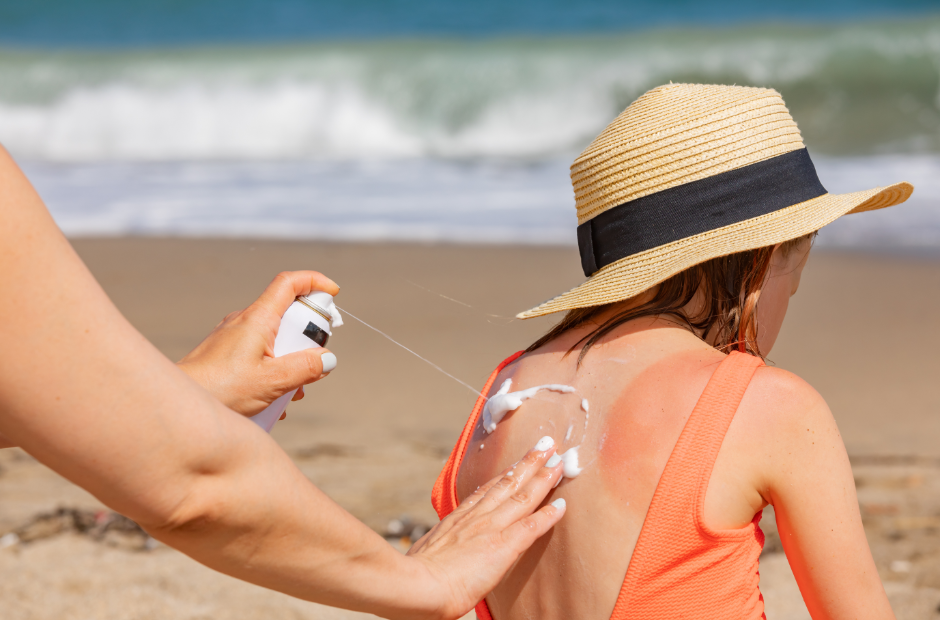
In addition to symptoms similar to heatstroke (nausea, headache, confusion, dizziness), sunstroke also causes reddening of the skin, rash and burns, weakness, and hot skin. Signs of sunstroke may appear several hours after being in the sun.
First aid for sunstroke
As with heatstroke, the person should be given fluids in small doses and moved to a cooler environment. Lower body temperature with cold compresses, especially by applying them to the head, and possibly use analgesics as well. Suitable fluids include plain water, warm tea (it triggers sweating and cools the body), a rehydration solution, or ion drinks. Then apply products with panthenol and vitamin E to sunburned skin.
How long sunstroke lasts
High fever should subside within 24 hours, however, the body will generally deal with sunstroke for up to 3 days. If the fever does not go away or there is loss of consciousness or stiffness in the neck, seek medical help.

How to protect yourself from heatstroke and sunstroke
Prevention is definitely the most important thing. You can protect yourself by using:
- head covering when in the sun - for example, a muslin scarf with a visor for children;
- enough fluids - especially make sure children drink enough;
- appropriate clothing - breathable material, watch out for too many layers;
- sports activities should preferably be moved to the morning or evening, when it is no longer so hot;
- do not leave a child alone in a car, even a few minutes could have fatal consequences.
In short
Almost everyone has probably encountered heatstroke or sunstroke at some point in their life. The symptoms and first aid are very similar; however, heatstroke is overheating of the body from heat, humidity, and an unventilated environment (it does not have to be in summer), while sunstroke is overheating of the brain from the sun (most often in summer, without head covering). It shows up as headache, nausea, and confusion. First aid is to give fluids in small sips, move to a cooler environment, and possibly lower body temperature using cold compresses or a lukewarm shower. If it is not possible to lower the body temperature or there is loss of consciousness or stiffness in the neck, medical help should be called. Prevention includes enough fluids, suitable clothing, head covering when in the sun, and choosing appropriate sports activities depending on the weather.
Have you ever experienced heatstroke or sunstroke? If so, how did you deal with it?


Write a comment
This site is protected by hCaptcha and the hCaptcha Privacy Policy and Terms of Service apply.