

Even before the baby is born, most mothers think about what diapering will look like. Whether they will buy conventional disposable diapers or rather eco-friendly ones. Whether they will prefer cloth diapers, which no longer need to be boiled and are much easier to care for. Or whether they will try the elimination communication method (EC), or diaper-free communication, in short diaper-freeing. There are more diapering options available today, and today we will focus on the last one, namely diaper-freeing. What is it, when should you start, and who is it suitable for?
What is the elimination communication method (EC)
The name says that it is a diaper-free method, but the reality is that we are trying to make sure the child does its business outside the diaper, which it may be wearing when not eliminating.
In practice, this looks like the mother trying to tune in to the baby and observe the signals that tell her the baby is about to eliminate. At the beginning, it really takes a lot of observing the child, who may be very calm before relieving itself or, on the contrary, restless, may kick its legs around, or may be staring and focused, and it may even have a specific expression on its face. It is very individual, so you need to give yourself time and observe what your own child signals.
When the child is eliminating, you can teach the baby a certain sound, for example c-c or e-e (or make up your own), which the child will later learn and know that when you hold them over a potty or sink, they can go.
When to start diaper-freeing
You can start with the elimination communication method at any time, even immediately after birth, but no later than by 6 months of age, because after that learning may be more difficult. Older babies stop signaling elimination, so later learning may not meet with positive results, although it is not impossible. Don’t set yourself high goals and try it slowly and gradually. You can also practice diaper-freeing only partially. For example, you can try putting the child on the potty to pee after every waking, and otherwise let them relieve themselves in the diaper. You can put them on the potty while breastfeeding, because that is usually when babies are most likely to pee. Or you can jump into it fully and try to have as few wet/dirty diapers as possible. It is only up to you, your possibilities, and your determination.
Who is diaper-freeing suitable for
This method is suitable for absolutely all babies. It is great for preventing tummy pain, and you will also save quite a bit of money on disposable diapers. The method is also suitable for babies who are unhappy with eliminating in the diaper and do much better when you unwrap them from the diaper.
How to do diaper-freeing in practice
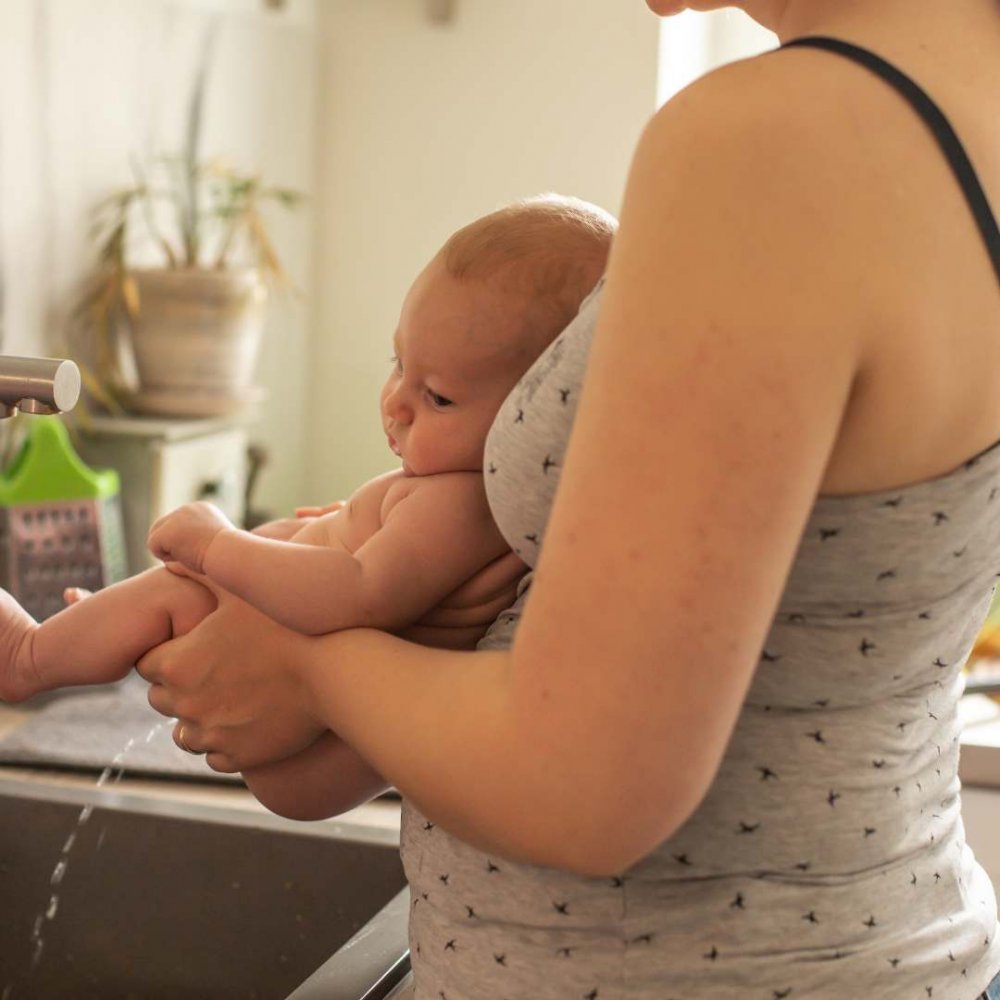
Diaper-freeing is carried out so that as soon as the child starts showing signals of eliminating, we undress them, lean them back against our belly, sit them on a special potty placed between our thighs, or hold them over a sink, toilet, or a small bowl in a curled-up position, and wait until the baby empties itself. While doing so, we can remind the baby of our “secret signal” so they learn it as soon as possible. Then they will be able to hold it until they hear our signal.
Aids for diaper-freeing
For diaper-freeing, it is good to be equipped so that it is as easy as possible for you, especially at the beginning. So what should you get:
- a special potty - but it is not a requirement, a bowl, sink, or toilet will do; a potty is especially useful away from home or outdoors;
- cloth diapers;
- or gentle disposable diapers - for example bamboo diapers;
- gentle wipes instead of conventional wet wipes;
- wash oil, which you use to moisten the gentle wipes;
- reusable changing mat.
Advantages of diaper-freeing
- finances, without question - whether you buy disposable or cloth diapers, you will ultimately save a lot of money;
- prevention of tummy pain;
- an easier transition from toddler to potty or toilet;
- more eco-friendly;
- fewer diaper rashes;
- there is no need to use any creams on the bottom;
- a stronger bond between mother and baby.
Disadvantages of diaper-freeing
- time-consuming - you need to be constantly on alert;
- learning the child’s signals (if they show any), or trying to put them on the potty regularly;
- you may not manage to catch every need outside the diaper.
Accidents are common with this method, and you cannot be angry with yourself if you don’t catch everything. The important thing is to keep trying, tune in to the baby, and stay calm. The elimination communication method is great, but if it were to make the mother more stressed, then it is better to start later or put it off indefinitely.

Write a comment
This site is protected by hCaptcha and the hCaptcha Privacy Policy and Terms of Service apply.