


As soon as the baby starts moving more, it begins to discover the world around it. First it rolls over, later crawls, sits up, and tries to stand. At this stage, a soft mat on the floor is no longer enough – the child can very quickly get to places that are not safe.
That is why many parents start dealing with baby playpens. These create a safe space where the child can play, explore the world, and at the same time be protected from falling, impact, or access to dangerous objects.
But it is important to perceive the playpen correctly. It should not be a place where we "park" the child. A properly chosen children's playpen it is more of a helper – a short-term safe space when a parent needs to cook, tidy up, or make a phone call.
What is a playpen for a baby and what is it used for

A playpen is an enclosed space designed for small children. Its main function is to create a safe place for play, rest, or first attempts at movement.
The most common uses of a playpen:
- safe play during the day
- space for crawling and trying new movements
- short-term placing of the child down during household chores
- protection from pets or dangerous places
It is important to distinguish playpen and crib. A crib is used primarily for sleeping, while a playpen is intended mainly for the child's active time.
A playpen makes the most sense during the period when the child:
- starts crawling
- starts trying to stand up
- moves quickly around the apartment
Types of playpens for children
There are several types of playpens on the market, which differ in construction, size, and method of use.
Classic children's playpens
Traditional children's playpens have a solid construction and a stable frame. They are often made from a combination of metal, plastic, fabric, or wood.
The advantage is stability and long service life.
Folding playpens
Folding models are ideal for parents who need to move or put away the playpen from time to time.
Advantages:
- easy folding
- compactness
- suitable for travel

Modular playpens
Today, very popular are modular playpens, which can be assembled into different shapes.
A typical example is a larger play area, such as the one offered by Monkey Mum® safety playpen – 180 × 200 cm, which gives the child plenty of room to move and play.
For smaller or medium-sized apartments, for example, Monkey Mum® safety playpen – 150 × 150 cm or 150 x 180 cm, which takes up less space but still provides a safe play area.
The advantage of these playpens is large play area and stable construction.

Doorway playpen / bed rail
Sometimes parents look for alternative ways to secure a space.
For example:
- doorway playpen – serves as a barrier between rooms
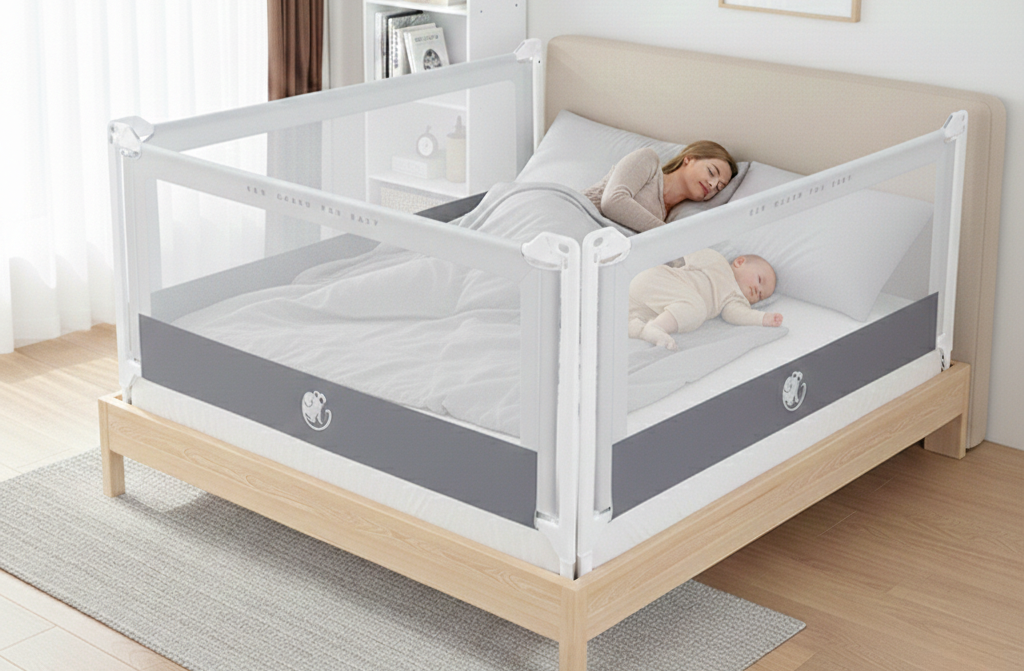
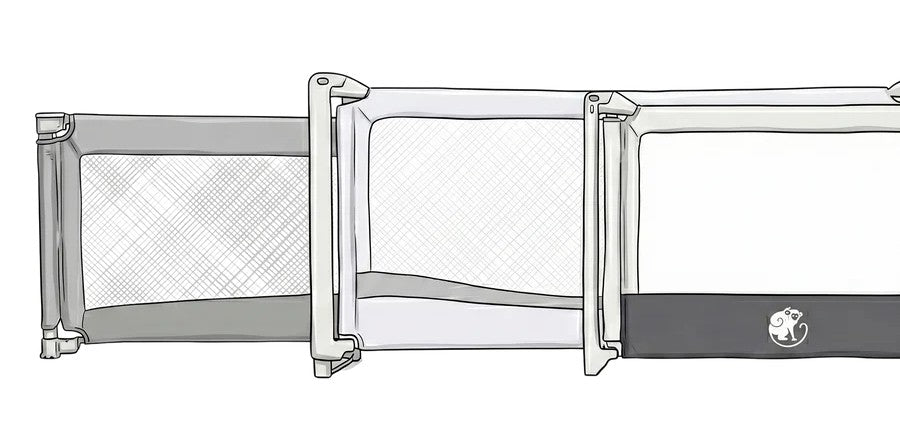
- bed rail – protects the child from falling while sleeping
However, these products serve a different function than a classic playpen and usually do not replace a full-fledged play area.
How to recognize a safe playpen for a baby
Safety should always come first when choosing a playpen. Not all products on the market meet the same standards.
When choosing, watch several key features.
Stability
The playpen must be sufficiently stable so that the child cannot tip it over when leaning on it. A solid construction is especially important at the moment the child starts pulling up to stand.
Side panel height
The side panels should be tall enough to prevent the child from climbing out. At the same time, they must allow a good view of the surroundings.
Materials
Safe children's playpens should be made of materials:
- free from harmful substances
- tear-resistant
- easy-to-clean
Soft textile walls are also safer in the event of a fall.
Certifications and safety features
A quality playpen should meet European safety standards and have:
- strong connectors
- stable frame
- non-slip features
Where to place the playpen
A big advantage of a playpen is the ability to place it almost anywhere in the apartment.
Living room
The most common place. The child is close to the parents and can watch what is happening around them.
Kitchen
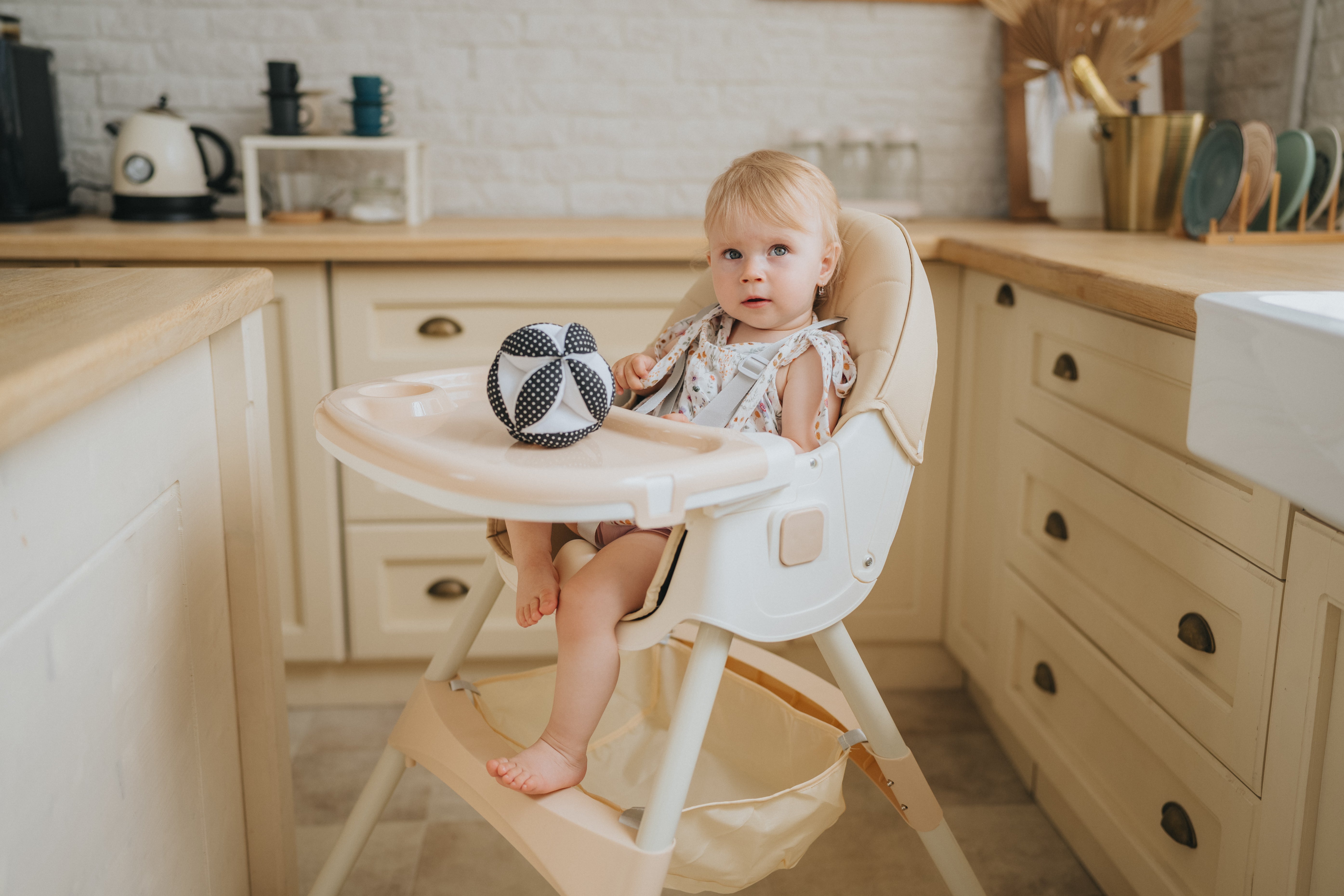
A practical solution when cooking. Parents can keep an eye on the child while safely separating them from hot appliances.
Hallway
In larger apartments, the playpen can also be placed in the hallway, where it creates a play area.
Small apartments
In small spaces, it's important to choose compact playpens for babiesthat don't take up too much space.

What to watch out for when choosing
When buying a playpen, parents often make several mistakes.
Too low side panels
Low playpens can make it easy for the child to climb out.
Unstable construction
Lightweight structures without a solid frame can shift or tip over when a child leans on them.
Wrong size
A playpen that is too small will quickly bore the child. On the other hand, one that is too large can be impractical in a smaller apartment.
"Temporary" solutions
Some parents try improvised barriers or combinations of furniture. However, these are often not safe.
Up to what age is a playpen used?
Playpens are usually used from around 6 months of agewhen the child starts moving actively.
The upper limit is individual, but it is usually this period:
- up to 18–24 months
- until the child climbs out of the playpen
As soon as the child is very mobile or can climb out of the playpen, it's time to start addressing other forms of home safety.
Summary: How to choose the right playpen
When choosing a playpen, it pays to follow a simple checklist:
- stable construction
- sufficient side height
- safe materials
- the right size for the space
- certified quality
Well-chosen baby playpen helps create a safe environment where the child can explore the world. At the same time, it gives parents greater peace of mind and confidence during everyday activities.
FAQ – the most common questions from parents
From when does it make sense to get a playpen for a baby?
Usually from the moment the child starts rolling over or crawling, that is, around 6 months of age.
Are playpens safe for children?
Yes, if they are high-quality, stable, and meet safety standards. Proper use and parental supervision are also important.
How big should a playpen for a baby be?
The ideal one is one that provides enough space for movement. Popular sizes include, for example, 150 × 150 cm, 150 x 180 or larger playpens 180 × 200 cm.
Can a playpen replace child supervision?
No. A playpen is only a safe space for short-term play. The child should always be under parental supervision.

Write a comment
This site is protected by hCaptcha and the hCaptcha Privacy Policy and Terms of Service apply.