

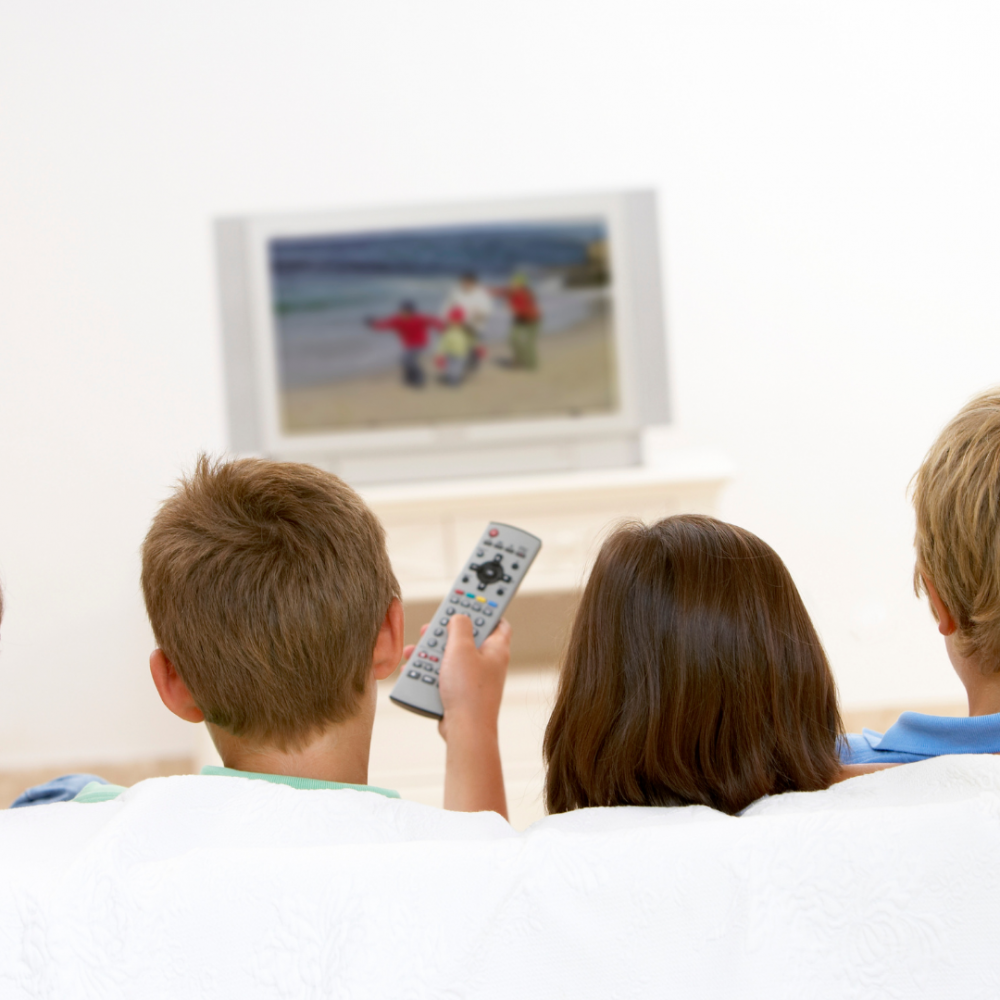
Television is undoubtedly one of the tools of modern times, owned by almost every household. In some homes, the television even has its own little place in every room. However, there are still more and more households where we won’t find a television, but using laptops, tablets, mobile phones, or desktop computers is the daily norm. Yes, that is the age we live in: an age full of screens. Many of us grew up with television, watching fairy tales and children’s bedtime programs, but on the other hand we also had plenty of activities outside. Today it is different; screens are portable, so people can stare into them even outdoors. How can we prevent that? What should we teach children instead of watching screens? Why not sit them in front of the television?
Why television and all screens are harmful
Babies and toddlers
For very young babies under one year old, television is really unnecessary. If you need to keep your child occupied for a moment so you can run to the bathroom, take a shower, or wash the dishes. Then it will be better for your baby if you put them in a bouncer or lay them on a blanket and take them with you into the room so they can see you and observe how things work in this world. It will be more beneficial for the baby, and they will still have you close by.
Ideally, children under two years old should not watch television at all, because they cannot connect image with sound. The sound in television comes later than the image, which adults do not notice, but children do. In addition, children this young do not have critical thinking and cannot distinguish good from evil even in fairy tales (e.g., Tom and Jerry or Masha and the Bear). They therefore take violence as something normal, and as a result they may hit other children.
Let’s be honest, for toddlers, screens can help with more demanding activities such as brushing their teeth (the child will cooperate better), car rides (if they would otherwise cry), when the child is sick, or if they are suffering from tooth pain (it helps distract from the pain). Of course, we should not let a child stare at screens all day. But if we use them for a few minutes and play, for example, some songs, educational fairy tales, or a fairy tale in a foreign language, then it can even be beneficial.
Passive activity, addiction, and attention disorder
The problem with screens is our passivity. Young children develop every day, constantly learning new things, eager to copy everything we do and discover the world; in short, they are naturally curious, and watching television or videos on a phone takes away their desire to learn. Suddenly they do not have to do anything, they only watch the screen. They do not even have to move, which later leads to the development of obesity. It can then also develop into screen addiction, and it is very difficult to wean children off it. In addition, if screen watching starts very early and usage time is not limited at all, it can have negative effects on brain development. It can even lead to attention disorders in children.
Learning by example
It is said that children under three absorb everything like sponges, and that is absolutely true. They learn very quickly, remember anything they see or hear right away, and are able to use it in the future at the moment we least expect it. The problem with television is that children take models from it. That means they learn various gestures, words, phrases, but also ways of behaving based on what they see. However, there is no interaction with another person, and problems with language development can also arise.
Difficulty falling asleep
Blue light is being discussed more and more often in connection with trouble falling asleep. Light emitted from screens tells the brain through the eye that it is daytime, and therefore the body does not naturally prepare for sleep. It can then be very difficult to put both a small child and a school-age child to sleep, and many adults also struggle with this.
Before sleep, children therefore should not look at screens at all; alternatively, it is necessary to use a filter that turns the screen red and thus eliminates blue light, which is the disruptive element. There are also red glasses against blue light, which can then be used by older children and adults.
World Television Day
On November 21, World Television Day is celebrated around the world. This day was created in honor of J.L. Baird, who invented image transmission to screens. Television was first launched in our country in 1953. As the saying goes, it is a good servant but a bad master. Too much of anything is harmful, and this is doubly true for children. We would like to encourage you to celebrate this day the opposite way, without television and ideally without any screen at all. Will you try it with us?
How to entertain children without screens
Walking together
Go outside for some fresh air and take a trip somewhere. You will tire the children out and they will still have lots of fun. You do not even need a specific destination; you can give children various tasks along the way and motivate them to walk, which they often sabotage.
Board games
By playing board games, children learn planning and responsibility for their decisions. The whole family can join in, and you will have lots of fun.
Reading books
Read a book to the children; it develops their later ability to learn. They will grow into better readers and speakers. With small children, you can look at the pictures in the book; older children can also be entertained by an Albi pen with books. You can also invent a story together. The imagination has no limits.
Cooking and baking together
Cook Sunday lunch together or bake a bundt cake. Cooking develops children’s creativity, increases attention and concentration, and above all develops fine motor skills. Even toddlers can help in the kitchen; all you need is a learning tower so they can reach the kitchen counter, and you can give them responsibility for things like stirring.
Looking through photos
If you have a small baby at home and an older child often feels jealous of them, creating a photo album or photo book with pictures of the older child from birth onward can help you. Show them that they were also this little and everything you did together, how you took care of them, so they know that all the attention used to be focused on them too.
If you only have one child or siblings are not jealous of each other, looking through photos will always capture and entertain the children.
It’s not all bad
We are not saying that screens are evil and that we should give them up immediately. We live in a digital age, and television, mobile phones, tablets, and computers simply belong to it. We should rather limit screen time and try to entertain children mainly with movement or activities that develop their motor skills (How to develop gross motor skills, How to develop fine motor skills in children). And if we do use a screen, then choose videos of a more educational nature.
We recommend setting clear rules with children that will apply to watching television and other screens and will be followed. For children older than three, make agreements together; that way it will be easier to agree on everything.
Most importantly, do not beat yourself up; in every situation we do the best we can, and if we are on our own with children, television can be a relief after a demanding day. Try to think more about how to do it in the long term. Set rules and give children boundaries that are important for both you and them.
We hope you enjoy a day without television (screens), and if you do not manage it exactly on November 21, try another day.



Write a comment
This site is protected by hCaptcha and the hCaptcha Privacy Policy and Terms of Service apply.