

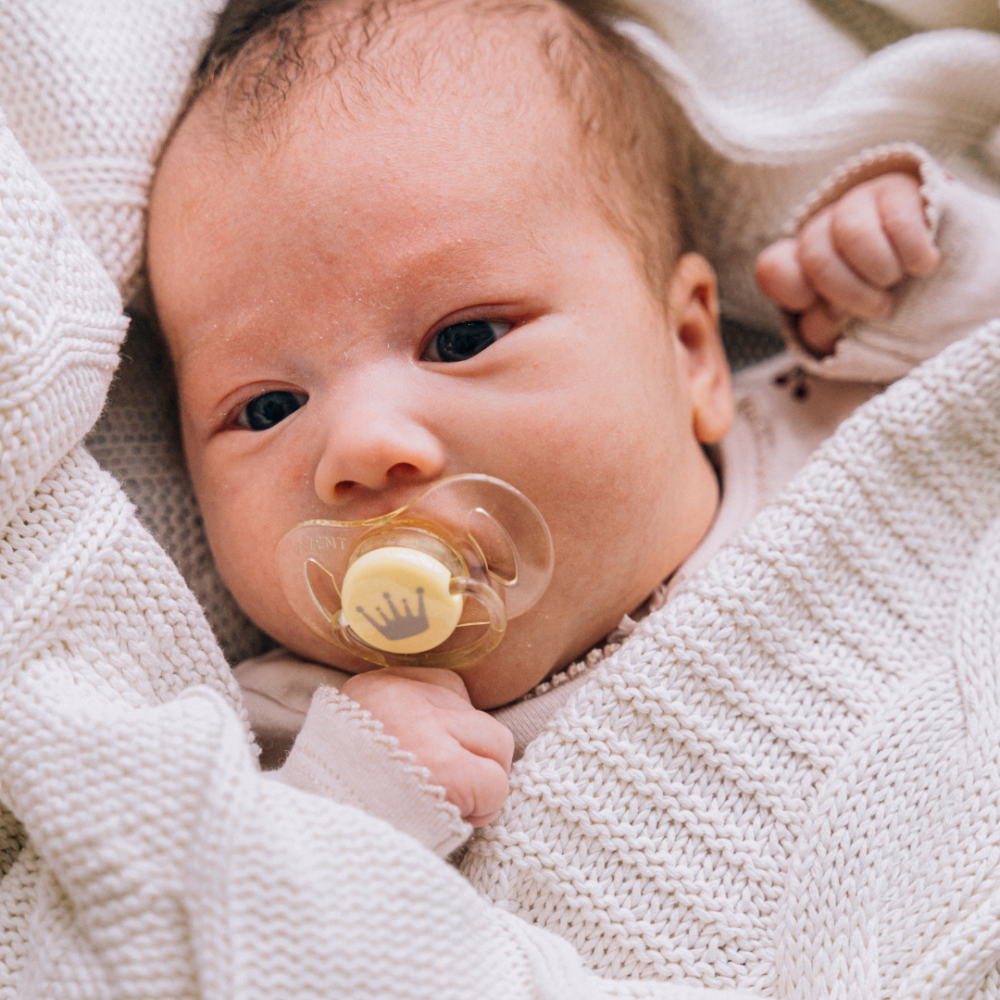
The history of the pacifier goes back to ancient Egypt; it only acquired its current form in the 19th century. A pacifier is a separation aid, or soother, that divides parents and grandparents into two camps. Some are absolute opponents, while others cannot imagine a baby without one. Nowadays, more and more children reject a pacifier, and many parents do not understand why their child in particular does not want it. On the other hand, there are many parents who do not want to give their child a pacifier because they believe it does not need one and that they will manage without it. What are the reasons that discourage parents from buying a pacifier, and why get by without one?
Why a pacifier is not a suitable aid
Lower lactation, early weaning, biting
A pacifier delays the feeling of hunger, which means that the child wakes up after longer intervals, and this reduces the mother's lactation. At the same time, sucking from the breast and from a pacifier is different (the tongue and mouth move differently), and it can result in the child being dissatisfied during breastfeeding, subsequent early weaning, and a switch from breastfeeding to formula. In children who already have teeth, a pacifier can cause biting the nipple.
It does not reduce the risk of SIDS
Using a pacifier does not reduce the risk of SIDS, or sudden infant death syndrome, which occurs in children under one year of age. Prevention of SIDS, on the other hand, is frequent breastfeeding as well as sleeping together, thanks to which the mother and baby tune in to each other and breathing pauses do not occur.
Poor tooth development
Opinions on tooth development (jaw deformation, higher tooth decay, etc.) when using a pacifier vary widely. Some say that use up to six months or up to one year is no problem, others say even up to three years is fine. Today there are also orthodontic pacifiers, which have a different shape than classic pacifiers and supposedly should not cause problems. Opinions of dentists differ, so it is up to the parents whether they will take the risk of poor tooth development or will not use a pacifier at all.
The child gets used to the thing, not to contact with the parent
With frequent use of a pacifier, the child becomes dependent on it and without it is then no longer able to fall asleep or calm down. The child therefore learns that its needs are met by things and not by people (parents). At a later age, dependence can also develop, for example, on cigarettes, or problems with overeating.
The child needs to be heard, not silenced
Parents often associate crying with a pacifier. As soon as the child cries, even though it has been fed, changed, and kept warm, it supposedly needs a pacifier to calm down. That does work (if the child accepts the pacifier), however, the child is rather silenced than having its needs met, which caused it to cry in the first place. Sucking as such undoubtedly helps a baby calm down and also helps with pain; however, a pacifier does not replace the need for contact with the parent or the need to have a good cry (if the child is overstimulated from the whole day, for example, it needs to cry a little in the evening to let off steam and not bottle it up inside). Rather than using a pacifier, the parent should look for the reasons for the crying and then address them in another way than by giving a pacifier.
When is it appropriate to give a pacifier?
If a child starts sucking its thumb even in situations where we cannot give it the breast (for example, in the car or in a stroller), then it is better to give it a pacifier instead, because we cannot later take the thumb away from the child, and it is difficult to wean it off thumb-sucking.
How to handle it without a pacifier
Breastfeed on demand, sometimes it may seem that the child wants to be at the breast nonstop (whether it is hungry, thirsty, bored, has pain from growing teeth, has a tummy ache, or is uncomfortable in some way); in such a case, let them have it, cuddle a lot, and stay in contact. A wrap and a carrier will be great helpers. Do not forget that around the 3rd week, 6th week, 9th week, 3rd month, 6th month, and 9th month, children go through a growth spurt and require more frequent breastfeeding so they can increase lactation for the coming days. At the same time, they are more tearful, require more contact, sleep less, and gain weight faster. It is completely natural, and in this case a pacifier will only make the situation worse.
Crying does not have to mean just a tummy ache, so do not immediately give various remedies for gas and try to observe when the child is restless and what the reason might be. Sometimes it is enough to switch vitamin D to a different brand or to react to the first signs of tiredness so that the baby does not cry from being overtired.
If a baby cries every evening at the same time and you know its tummy does not hurt, then let it cry it out in your arms - through crying it processes the experiences of the whole day, and thanks to your arms it will be in a safe environment where it can afford to release its emotions.
Perhaps while reading this article your hair is standing on end, because you cannot imagine life with your baby without a pacifier and it threatens your mental and physical well-being. There are situations where a pacifier can help a great deal, but it should not be overused - for example, when the child cries in the car or when the baby cries in the stroller. However, even in these cases the child is telling us about its dissatisfaction, which we should look at from another perspective as well.
Whatever you decide, without a pacifier some situations with a baby will most likely be more challenging, however, you will not have to deal with later pacifier weaning, which can ultimately be even more demanding.

Write a comment
This site is protected by hCaptcha and the hCaptcha Privacy Policy and Terms of Service apply.