


What is contact sleep?
When it comes to a baby's sleep, parents want the best and safest — but it is not always easy to know how to achieve that. From contact sleep to bed-sharing with your little one, it is important to understand how to keep your child safe while also getting enough rest.
Contact sleep refers to a situation where your baby sleeps while touching or being held by a caregiver — most often on your chest or in your arms. Many parents rely on contact naps, especially with newborns who are comforted by closeness.
Advantages:
- Helps regulate the baby's temperature and heart rate
- Supports bonding
- Often leads to longer and calmer sleep
Disadvantages:
- Can be exhausting for parents
- Is not safe if you fall asleep during the sleep
- Difficult transitions of the child into the crib
Safety tip: If you practice contact sleep, make sure you are fully awake and alert, and that your baby is in a safe sleeping position.
Is bed-sharing safe?
Bed-sharing (the baby sleeping in the same bed as the parents) is a common practice around the world — but it can raise safety concerns.
Properly done bed-sharing can support easier breastfeeding and improve sleep for both parents and baby. However, safe bed-sharing practices are essential:
- Use a firm mattress with tightly fitted sheets
- No pillows, heavy blankets, or soft toys near the baby
- Always place the baby on their back to sleep
- Make sure there are no gaps where the baby could get trapped
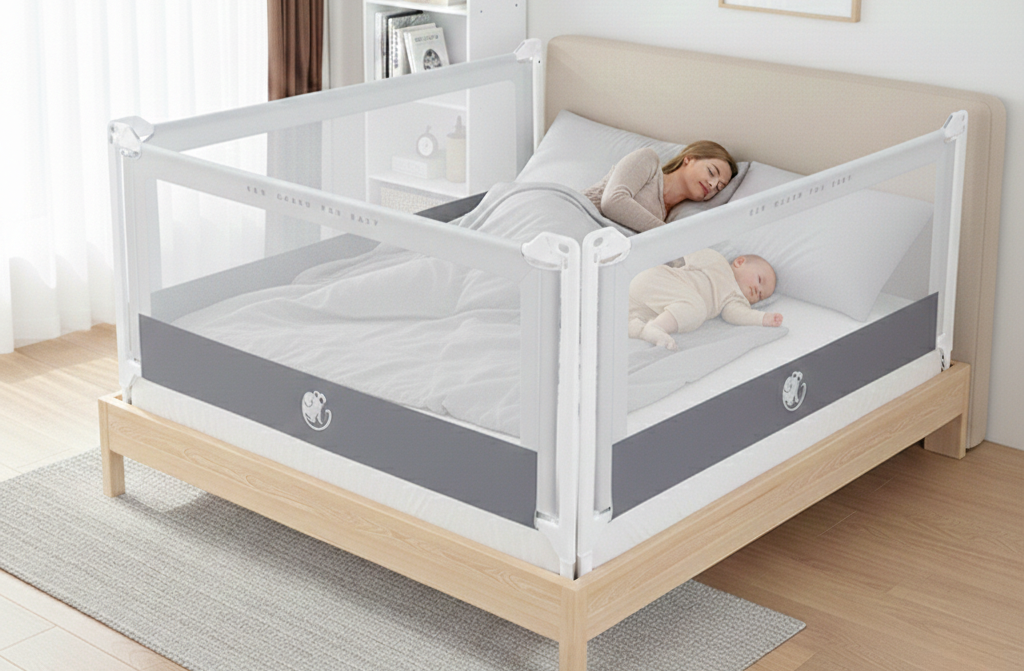
Safer bed-sharing with bed barriers
One of the best ways to share a bed safely is to create a protected space on the bed. Products such as side barriers or guards can offer peace of mind.

Complete bed safety setup for families that share a bed
If you are planning long-term bed-sharing, creating a safe crib-like sleep zone on your bed may be the solution.
This setup provides a 360-degree safety barrier, which is ideal for toddlers or children who move a lot during sleep.

Quick checklist: Baby bed safety
Whether you practice contact sleep, bed-sharing, or are transitioning to crib sleep, use this checklist:
- Baby sleeps on their back
- Only a firm mattress
- No loose bedding or pillows
- Keep the bed surface free of clutter
- Avoid falling asleep with the baby on sofas
- Consider using safety guards or barriers
Final thoughts
There is no one-size-fits-all solution for a baby's sleep. Whether you are in the contact sleep stage or looking for safe bed-sharing solutions, the key is to be informed and put safety first.
Your baby's sleep should bring peace — to them and to you.


Write a comment
This site is protected by hCaptcha and the hCaptcha Privacy Policy and Terms of Service apply.