

Tidying up toys is a big topic for all parents. The same thing every day can feel like an endless story. With younger children, we cannot expect toys to always be put away and in their place. We have to prepare for a period when everything will be taken out and thrown on the floor, not just toys. Younger children are most drawn to drawers, shelves, cabinets, wardrobes, simply anywhere there are interesting things. Toddlers can then be guided toward tidying up — how do we do that?
Imitation
Children up to about three years of age imitate everything others do, so if we set an example and tidy up toys in front of them, they will start tidying them up too. At first it probably won’t be perfect, but we must appreciate the effort and interest with which the child approaches tidying up.
Tidying is a game
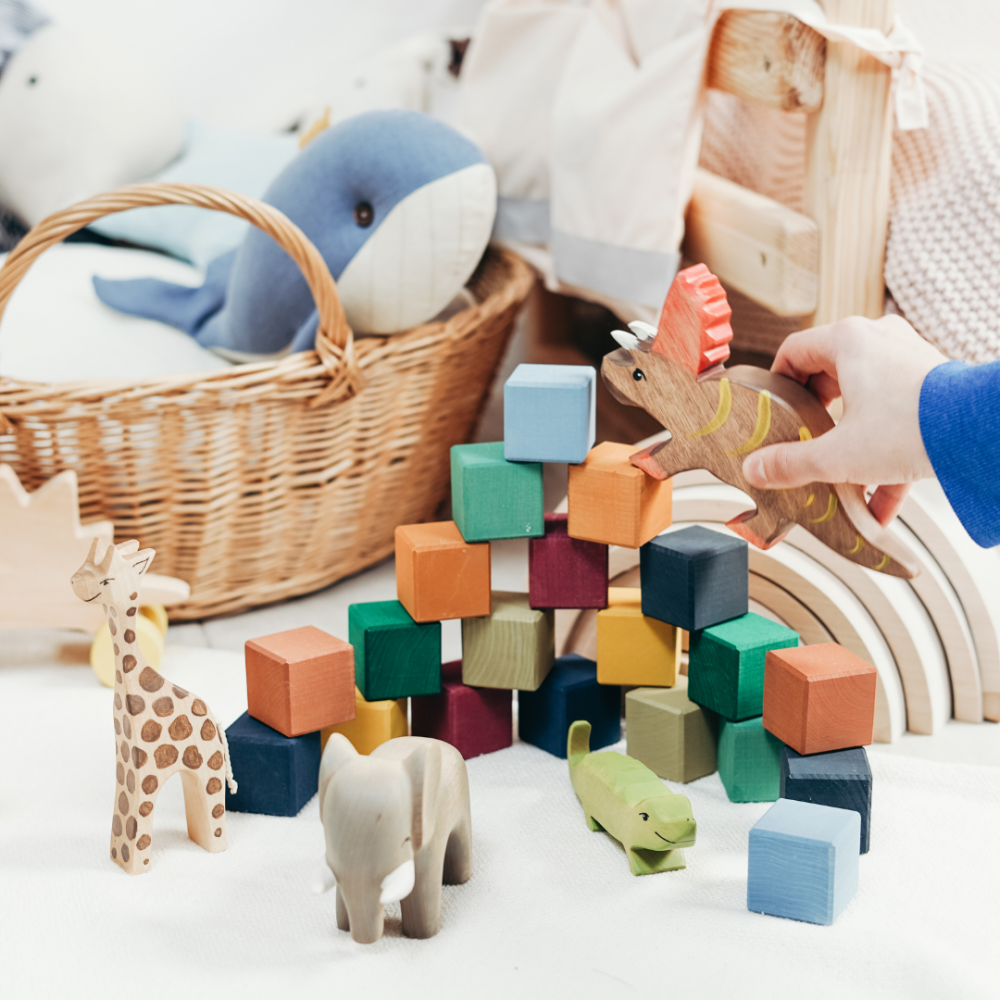
Since all children love playing, we should not view tidying up toys as a duty, but as a game. Make it fun. We can sing, dance, sort stuffed animals by size, arrange toys by color — imagination has no limits.
Tidy up continuously
It is good to put away toys that the child is not currently playing with. This creates more space for the toys in use, and at the end of the day tidying will be faster and less demanding.
Consistency
Be consistent in what you tell children. If you promise them something for tidying up toys, then they need to actually tidy them up. If they only do it partially or not at all and still get the reward, they will test you next time and push your boundaries. This applies not only to tidying up toys.
Do not tidy up some projects
Sometimes it is very important for children to leave toys out, because they are building something from blocks or having a tea party with stuffed animals, and you step in and tell them to put it all away immediately because it is time to go outside, go to bed, a visitor is coming, or anything else. How would you feel if you were working on something and suddenly had to put it all away? You probably wouldn’t like it either. So it’s a good idea to agree with them that they can leave their projects in progress and, once they finish them, they put them away again. Of course, this is provided they won’t be in the way and that they are actually working on them.
Fewer toys in sight
When you look at how many toys your children actually play with, you will surely find that it isn’t many. Often children only need a few toys and don’t pay attention to the rest at all, or only very little. So you can put away lots of toys and, after some time, offer them to the child again and put others away. It is also worth thinking about toy purchases — a great rule is one toy in, one toy out. So when you buy a new toy, you give one toy away, and your home won’t be filling up with toys, which means there will be fewer to tidy up.
Communication
With children aged 2–3, communication works very well, and it’s good if you explain why tidying up toys is important to you and that you would really appreciate their help with it.
We wish you lots of success with tidying up not only toys and believe that with the right communication, you can manage it with children, even if it won’t always be perfect. The important thing is to persevere.


Write a comment
This site is protected by hCaptcha and the hCaptcha Privacy Policy and Terms of Service apply.