

Winter fun and playing in the snow are a joy for children. For parents, though, that’s only true until the little one comes home completely soaked. How should you dress your youngest children so they stay warm, comfortable, and still enjoy moving around outdoors?
Proper layering is the key
Thanks to properly layered clothing, children will stay warm, while the clothing also allows heat to be regulated according to current conditions so they do not overheat.
First layer
The first layer is the foundation of proper dressing, because it comes into direct contact with the skin and its main role is to wick moisture (sweat) away so the body stays dry and warm. That’s why it’s a good idea to choose clothing made of merino wool, which handles these requirements perfectly. Another option is high-quality functional underwear, which dries quickly and, unlike cotton, does not hold on to moisture for long.
Second layer
The main role of the second layer is to warm and retain heat. Ideally, dress your child in pieces with insulating properties, such as fleece or wool. This layer should also be looser than the first so air can move freely between the layers and provide better insulation.
Third layer
The third layer is crucial for protection against wind, rain, and snow. It helps ensure your child doesn’t come home soaked and chilled by the wind. A suitable choice at this point is clothing with a membrane and softshell, which offers greater mobility and comfort during activities.
TIP: Since this is the last visible layer and it gets dark early in winter, you should focus on jackets and trousers with reflective elements.

Don’t forget the accessories
Proper clothing is the basis, but without accessories it’s only half the job. What else should you not forget?
- Gloves and a hat: Up to 30% of body heat escapes through the head, so warm hats are essential. Gloves should be waterproof and lined with fleece.
- A neck warmer instead of a scarf: For smaller children, a neck warmer is safer and easier to put on.
- Warm socks: Wool ones or those with a blend of functional materials are ideal.
- Quality footwear: Insulated, waterproof, and with enough room for toes to move.
How do you know your child is dressed properly?
The line between clothing that is right and clothing that is not is fairly thin. So you should watch out not only for hypothermia, but also for overheating, which can be just as unpleasant and dangerous.
Touch the nape of the neck
The easiest way to find out whether a child is too cold or too hot is to touch the back of their neck. If it is dry and pleasantly warm, everything is fine. A cold nape means the child is chilled and needs another layer of clothing. On the other hand, a sweaty and hot nape signals that the child is overheated and that some clothing should be removed.
Your child’s mood
Not just touch, but also your child’s mood will tell you whether they are dressed properly. If they don’t feel well, they will let you know. You can expect complaints about cold feet or hands, as well as a grumpy mood. They will complain about cold feet or hands. Overheating, on the other hand, is easy to spot at a glance; red cheeks will give it away. Because of the heat, little ones will also want to move more to cool their bodies down. But that can lead to further warming and sweating, which increases the risk of catching a cold.
However, remember that every child is different—some are more sensitive to the cold, while others tolerate it better. Adapt clothing to individual needs and current conditions.
How should you dress little ones in winter for a carrier?
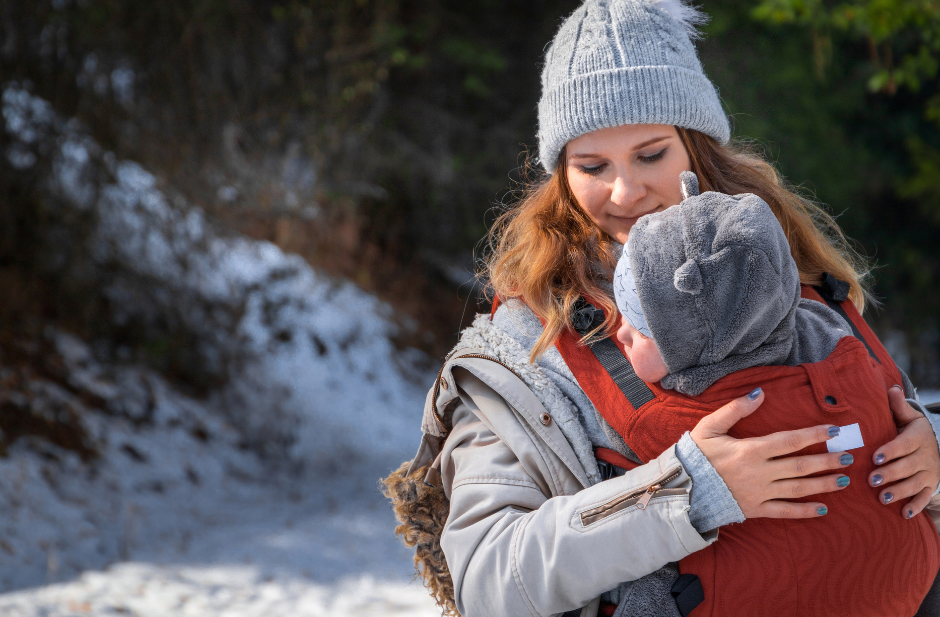
A special case in dressing is clothing for a carrier. Children in a carrier share warmth with a parent, which is partly an advantage, but at the same time you also need to pay attention to freedom of movement and protection from the wind.
The ideal choice is a babywearing jacket that can be combined with a carrier to prevent drafts. Also make sure that the legs and arms stay well covered and protected against the cold. Finally, check that the child is not being squeezed too much—the layers of clothing should not restrict their movement.

In short
Proper clothing is the foundation of relaxed winter days with your children. The key to success is layering, choosing suitable materials, and adapting clothing to the specific activity. For a stroller walk, add a warm footmuff that will keep your child warm even when they are not moving. And for playing in the snow, make sure the first two layers warm and wick away sweat, while the last layer mainly insulates and prevents getting wet. Above all, your little ones’ comfort is the most important thing, because it lets you fully enjoy your time together.
Which winter activities do you prefer?



Write a comment
This site is protected by hCaptcha and the hCaptcha Privacy Policy and Terms of Service apply.