

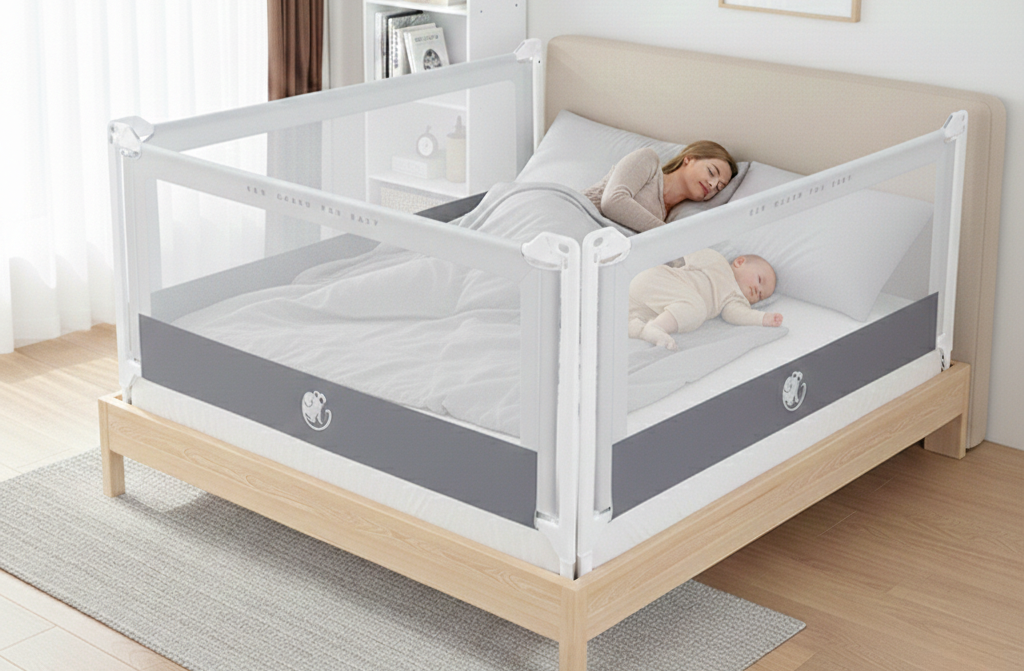

The arrival of a baby is one of the most beautiful moments in parents’ lives, but it also brings a great deal of responsibility. A newborn child is completely dependent on adult care, and concerns about their health and safety naturally arise. Parents are most worried about sleep, when they do not have the child under constant supervision. It is precisely in this context that the question is very often addressed of whether to get, how it works and until when to use it, so that its use really makes sense.
It is one of the most commonly purchased aids for newborns and infants. For some parents, it is indispensable; others consider it unnecessary. The truth is that it is not mandatory and does not replace parental care or medical supervision. But if it is chosen correctly, set up properly, and parents know how long to use it, can significantly contribute to calmer nights for the whole family.
What is a monitorbreathing and what it is for
It is a device designed to monitor a child’s breathing movements during sleep. Its main task is to record the regularity of breathing and, if it slows down or stops completely, immediately alert parents with a loud alarm.
The device can monitor:
- movements of the chest and abdomen
- breathing rate
-
in more advanced models, also heart rate or the child’s position
Using this device gives parents above all a sense of security. However, it is important to realize that does not prevent sudden infant death syndrome, but it can help you respond in time if a breathing pause occurs.
How does it work?
So parents can use it correctly, it is important to understand, how it works in practice. The basic principle is similar for all types – the device tracks regular movements caused by the child’s breathing and evaluates their frequency.
Breathing sensing methods
Baby breathing monitoring mat
The mat monitor is placed under the crib mattress. It monitors micro-movements that occur with each inhale and exhale. This type is very accurate and stable, so it is especially suitable for home use in the first months of a child’s life.
Monitoring a baby’s breathing with a leg device
A leg device is a wearable device that is attached to the child’s ankle. It tracks movement and, in some models, also blood oxygenation. The advantage is the possibility of monitoring the child even outside the crib; the disadvantage may be the need for careful fastening.
Baby breathing monitor calibration and its importance
Proper calibration is essential for its reliable operation. If the baby breathing monitor is not calibrated properly, false alarms may occur or, conversely, the monitor may fail to detect a problem.
Calibration is necessary in these cases:
- when connecting the device for the first time
- after moving the monitor
- when changing the mattress
-
after a long period of non-use
Parents should always follow the manufacturer’s instructions and not underestimate the calibration of the breathing monitor.

Where should you place it?
Question where where to place it has a major impact on its functionality.
- The pad-type breathing monitor belongs directly under the mattress, ideally in the area of the child’s chest
-
The breathing monitor worn on the foot is attached according to the manufacturer’s instructions
Incorrect placement is one of the most common mistakes parents make and often leads to false alarms.
Monitoring a child’s breathing – yes or no
The decision to get this device is very individual. For healthy full-term babies, it is not necessary, yet many pediatricians recommend using it as a preventive aid.
It is especially suitable:
- for premature babies
- for children with breathing difficulties
- for parents who have increased concerns about the child’s safety
It is always important to combine the use of a breathing monitor with safe sleep practices.
Until what age should you monitor a child’s breathing?
Parents often ask up to what age it makes sense to monitor a child’s breathing. The highest risk of SIDS is in the first months of life, especially up to six months, when the child is most vulnerable.
Most experts recommend:
- use for at least 6 months
-
for some children until 9–12 months of age
How to know it is no longer needed
- the child rolls over on their own
- breathing is regular and stable
- the child has developed motor skills
-
sleep is calm without frequent fluctuations
How long to use the device also depends on the parents’ peace of mind. Some phase it out gradually, others only around one year of age.
How to choose the best one?
When choosing a breathing monitor, it is important to consider:
- type of breathing detection
- ease of use
- the need to calibrate the breathing monitor
- compatibility with the mattress and crib
-
reviews and experiences of other parents
The ideal choice is the one that matches the needs of the child and the family’s lifestyle.
The most common mistakes when using:
- incorrect calibration of the breathing monitor
- incorrect sensor placement
- relying only on the monitor
- too early stopping use of the monitor
A baby breathing monitor can make it much easier for parents to sleep peacefully and feel reassured, if they know how it works, where to place it, and how long to use it. A properly chosen and used device provides safety and emotional support during the first months of a child’s life, which are among the most demanding periods of parenthood.


Write a comment
This site is protected by hCaptcha and the hCaptcha Privacy Policy and Terms of Service apply.