


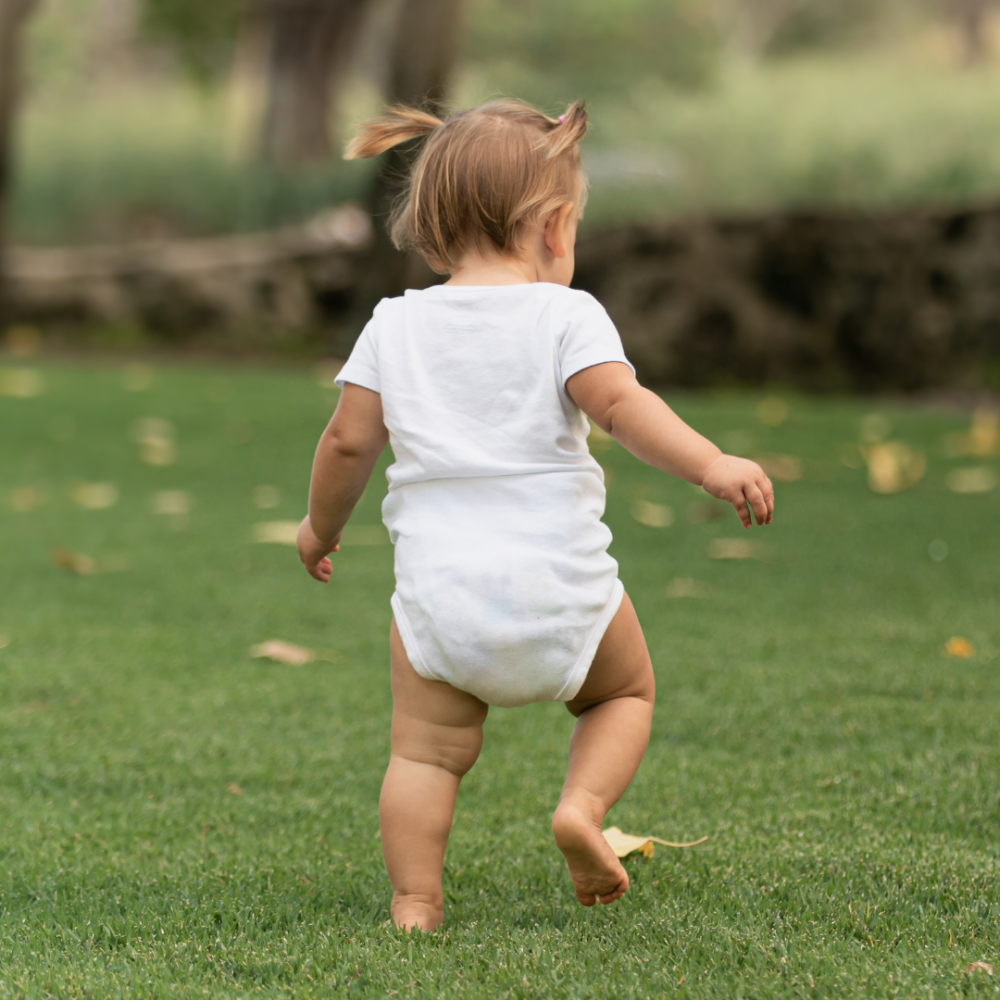
First steps are an amazing milestone in every child’s life. Many parents wish their child would finally start walking on their own, so they often help them and pull them by the hands, thinking it will teach them faster (much more often, grandmothers and grandfathers do this). But the opposite is true. Why shouldn’t you pull children by the hands when they still aren’t walking on their own, and how can you do it better?
Why not lead a toddler by the hands when they still don’t walk on their own
- The child will not start walking on their own faster; on the contrary, this will slow their development;
- the child is not motivated to venture out into space on their own, because they know someone will always hold them by the hand/hands;
- by being led by the hands, the child does not sufficiently strengthen the abdominal muscles and the muscles around the spine to be able to walk upright on two legs without support;
- leading by the hands can damage the shoulder ligaments, which are not yet sufficiently developed for this type of walking;
- the child has relaxed abdominal muscles and the soles of the feet are not in the correct position either, which leads to poor posture of the entire body.
How to do it better
- Let the child do only what they can manage on their own;
- the most important stage of development is crawling, whether on all fours or walking around furniture, which is actually also crawling, just vertically;
- the longer the child crawls, the better, ideally for at least 4 months;
- when they want to explore the world on higher levels, they will learn to stand up at furniture via the knight position (kneeling on one knee) and start moving with support from their hands, and once the child is sufficiently stable, they will set off on their own into open space without support;
- do not use a baby walker;
- if the child is still not sure, then sit down with your partner and let the child try to take a few steps between the two of you, and if they need some support, hold them at the hips; that will help them much more;
- if the child is trying to walk on their own without support, let them fall; it is very important for them to learn to work with balance, to coordinate the whole body, to become aware of the arrangement of things in space relative to themselves, and to learn to stop when they need to.
Every child has their own time, and as adults no one will care whether they started walking before their first birthday or not until they were a year and a half old. Don’t put so much pressure on yourself, don’t compare your child with other children, and give your little one enough time; they’ll figure it out on their own. Stick to the rule of minimal support and you’ll see that the child will learn to walk anyway, and much sooner than if you help them.


Write a comment
This site is protected by hCaptcha and the hCaptcha Privacy Policy and Terms of Service apply.