


With the arrival of a child, most mothers start dealing with what to eat. They realize that their diet has not been sufficiently balanced up to now, whether because of pregnancy nausea or, on the contrary, pregnancy cravings. It is ideal if a woman starts adjusting her diet even before getting pregnant, so she can learn it and make it automatic, because after the baby is born she may not have enough energy, mood, or time for it. So what is the ideal diet for a breastfeeding mother?
Eat more, but less often
Breastfeeding is very energy demanding and can be an exhausting period at the beginning. A woman feels very hungry, so she should eat much more to give her the energy she needs to care for the baby. If she does not have much time to eat, it is better to eat less often, but in larger portions. Even three or four times a day, but substantively, is enough.
Asking for help does not mean failure
It is great if a woman cooks ahead before giving birth and freezes the food. If she does not have this option or her food supplies run low quickly, then it is okay to ask her loved ones for help. Don't worry, it does not mean failure. In the past, the whole tribe took care of a woman, later the rest of the family members did, and today a woman is mostly on her own for everything (caring for the child, her husband/partner, the household, cooking, cleaning, and it is beyond her means, even though she is on maternity/parental leave and therefore should have time for everything, to manage it all). So do not be afraid to ask for help; grandmothers will surely be happy to get involved in cooking and caring for the baby.
A mother's diet matters
Breast milk is made from blood, so sparkling water or lentils will not cause bloating in the baby. However, the best nutrients do get into the milk, so if a breastfeeding mother does not eat a sufficiently nutritious diet, it will not affect the breast milk, but it will affect her mental and physical condition. Some vitamins, however, depend on the mother's diet, and therefore she should supplement them through a high-quality diet.
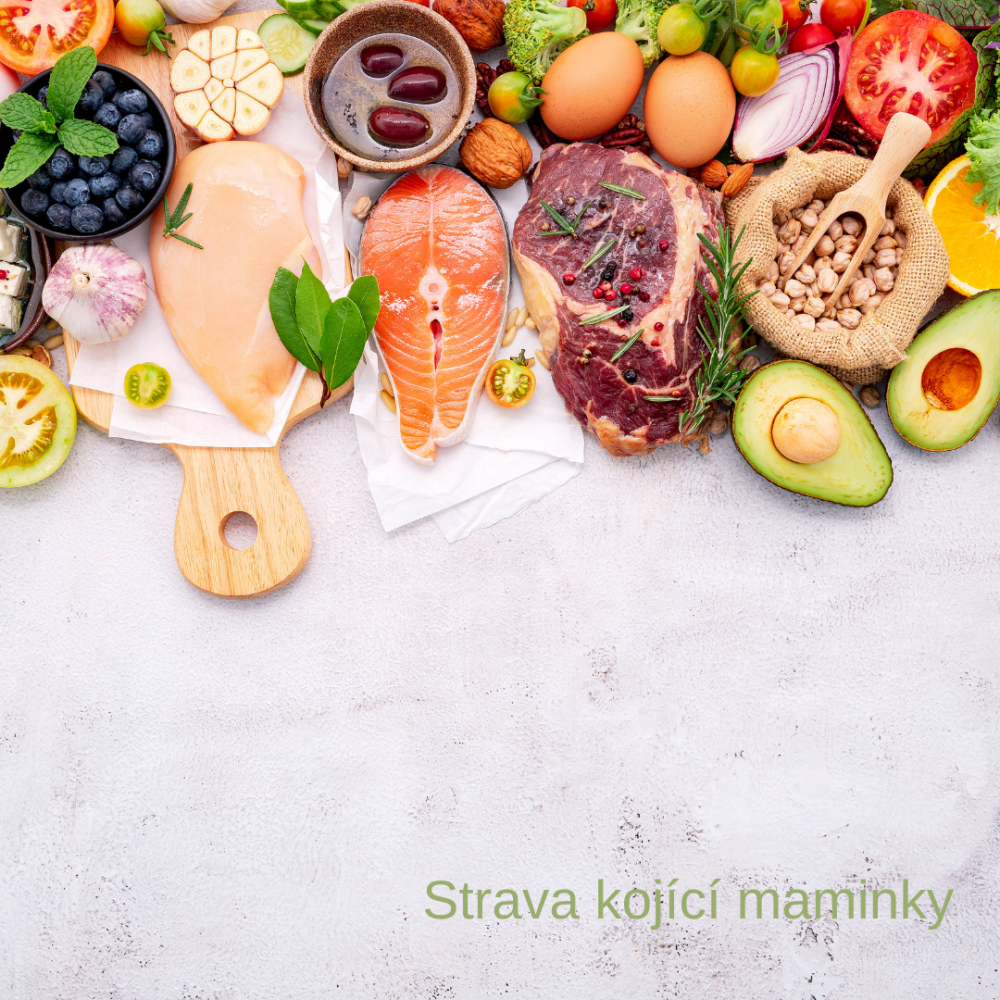
What a breastfeeding woman should eat
Above all, quality fats to replenish energy and animal products that provide the necessary vitamins, minerals, and especially iron, which is lacking due to blood loss (similarly, during menstruation a woman should increase her iron intake, i.e. animal products).
- quality fats (butter, lard, ghee, coconut oil)
- broths (meat, bone, or meat-and-bone)
- meat and offal (liver, kidneys, ...)
- fish and seafood
- eggs from quality sources
- dairy products (ideally sheep and goat products)
- fruit and vegetables
- legumes
- grains, preferably gluten-free ones (quinoa, millet, amaranth)
Supplements
Among supplements, it is advisable to take magnesium, which helps mothers cope with fatigue from lack of sleep and overall exhaustion. Magnesium can be supplemented in the form of capsules, Epsom salt baths, or by rubbing magnesium oil into the skin.
Childcare is often demanding and few mothers have energy to spare, so whether a mother breastfeeds or not, her diet always matters.


Write a comment
This site is protected by hCaptcha and the hCaptcha Privacy Policy and Terms of Service apply.