



Constipation troubles many people (everyone has surely experienced it at least once in their life), especially mothers of infants and toddlers, because they often do not know how to help their little ones with tummy pain. What are the causes of constipation, what should be done about it, and when should you see a doctor?
When we talk about constipation
Constipation can appear temporarily, for example with a change of environment (vacation), a change in diet (first solid foods), after a stressful situation (starting daycare), and so on. It is nothing unusual and usually goes away within a few days. However, if it lasts longer and is accompanied by other symptoms, then it deserves attention. We talk about constipation when:
- the child has no stool for 3 or more days (with the exception of breastfed children, who may not have a bowel movement for up to 10 days because breast milk is well absorbed), and this lasts for several weeks;
- the child complains of painful bowel movements, which prevent them from trying again and they would rather hold the stool in;
- the child has stomach pain, bloating;
- the child has a hard tummy and refuses to eat.
Constipation in infants
If constipation appears, it is a good idea to increase fluid intake so that the stool softens and can pass out more easily. For breastfed babies, increasing breastfeeding should be enough. In formula-fed children, the problem may be that the formula itself can cause constipation, especially when switching from breast milk to formula. Today there are many types of formula on the market that help with constipation or even with spit-up (reflux in children).
Besides increasing fluids, you can also try leg exercises (bicycle movements), tummy massage, a warm bath, and possibly a rectal tube.
One possible cause may also be cow's milk protein allergy, which then needs to be addressed with a doctor who will perform the necessary tests and make a diagnosis.
In the long term, tummy pain and difficulties with bowel movements can be prevented using the elimination communication method.
Constipation in toddlers and older children
In children who already eat a regular diet, constipation may be caused by a lack of fiber, so definitely remember to include fresh vegetables and fruit, either as purées or pieces; dried plums and apricots are great too, as is plum juice. A meat and meat-and-bone broth is also an excellent helper. Regular exercise is also important to get the intestines moving, and of course fluids should be replenished sufficiently.
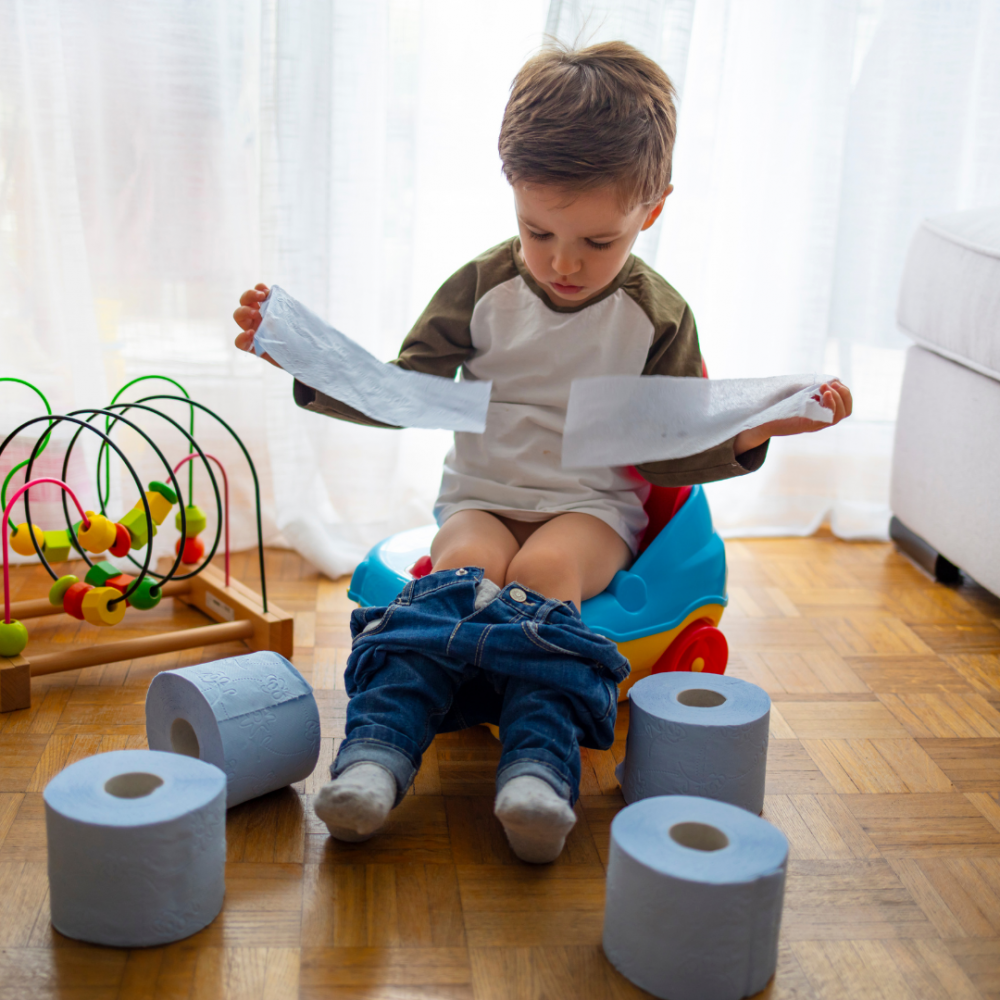
Constipation can appear in toddlers whose parents are potty training them, but they are not ready for it yet and tend to hold in their stool. In this case, it is better to postpone potty training and wait until the child is mature enough.
Starting daycare can also significantly affect bowel movements. Suddenly the child has a different routine, is busier with various activities in daycare, and so holds in their stool. Another problem may be the loss of privacy, which they do not have in the daycare bathroom. It is important to talk to the child about bowel movements, get up early enough in the morning so the child can sit on the potty as long as needed, and if it does not work, remind them about the potty at home after returning from daycare.
When to see a doctor
Sometimes, even with the advice above, the child is unable to have a bowel movement, and to help the mother too (meaning psychologically), it is advisable to see a doctor, who may prescribe some suppositories or arrange a more detailed examination.
You should definitely see a doctor if the child has severe stomach pain, which may be accompanied by fever, loss of appetite, or even vomiting. Another problematic sign may be blood in the stool, which does not necessarily mean anything serious, but it is better to visit a doctor unnecessarily than to underestimate something.
If your child is currently troubled by constipation, try our tips, and if stool does not appear within a few days, do not hesitate to contact your doctor; they will surely advise you on what to do next.


Write a comment
This site is protected by hCaptcha and the hCaptcha Privacy Policy and Terms of Service apply.