

The arrival of a child brings joy, but also a completely new perspective on the home. What used to be ordinary and safe can suddenly become a potential risk. A safe home for a child is not a matter of overcaution - it is a natural part of parenting.
Why a child's safety at home is essential from birth
Children develop very quickly. In just a few months, a lying baby becomes a curious little explorer who crawls, stands up, and tests the stability of everything around them. It is precisely this natural curiosity that is why it is necessary to think about safety from birth - not only when the child starts walking.
Risks that parents often do not even realize
- unstable furniture that can fall over
- sharp edges of tables and dressers
- accessible outlets
- hot water in the bathroom
- chemicals in the kitchen and bathroom
- stairs without railings
Prevention is always easier than dealing with the consequences. Let's go through the individual rooms and the specific measures that will increase your child's safety.
1. Bedroom – safe sleep and first steps
Safety in the bedroom
Safety in the bedroom starts with sleep itself. A baby spends many hours a day in the cot, so it is important that the space is as safe and clear as possible.
Bed rail or cot with rail
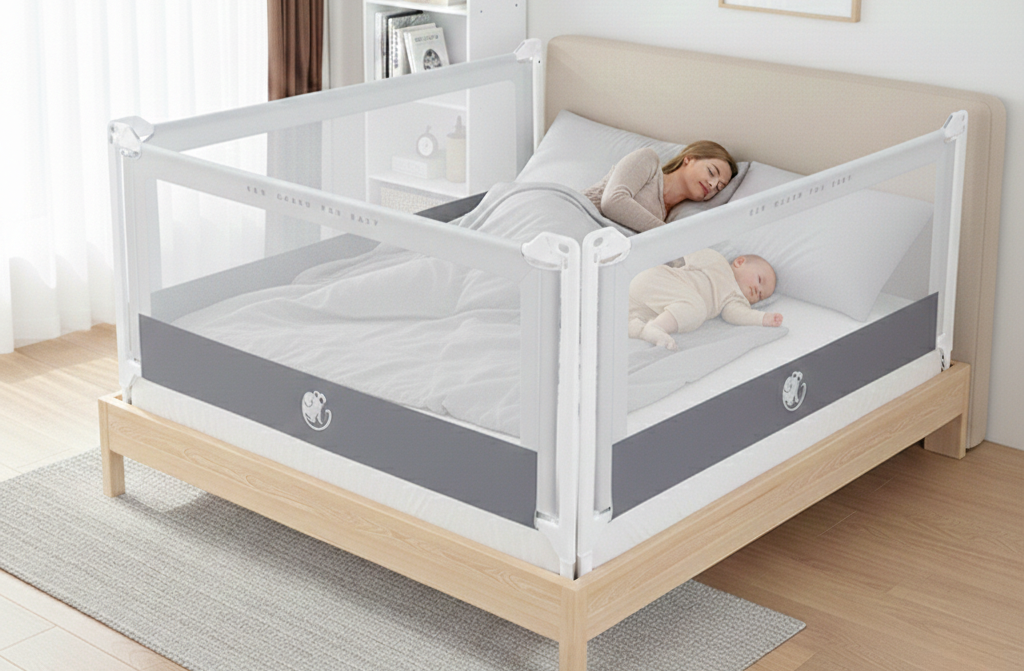
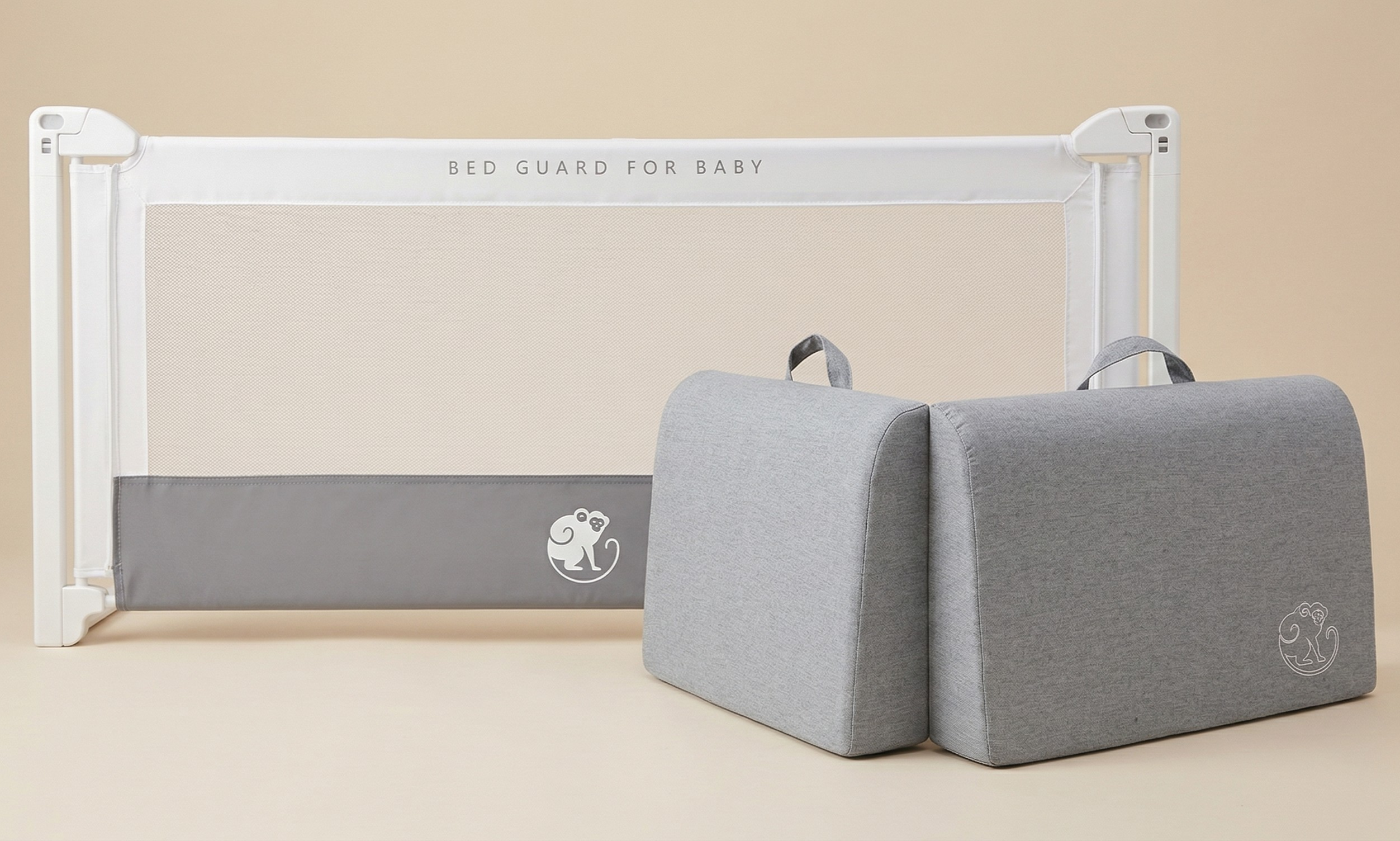
If a child sleeps with their parents in a double bed, it is advisable to use a high-quality bed railthat prevents falls during sleep. It serves as a protective barrier on the edge of the bed and increases safety especially for smaller children who often roll over at night.

Children's bed with rail it can be used as a co-sleeper next to a double bed, a safe space for the first movements, or as a separate children's bed with a rail.

breathing monitor, baby monitor
Electronic baby monitors and breathing monitors help you keep an eye on your baby even when you are not directly in the room. They are especially suitable in the first months of life.
Sharp corners and drawers on the nightstand
Nightstands often contain small items that can be dangerous. Use childproof outlet covers and corner protectors.
Anchoring cabinets and dressers to the wall
One of the biggest risks is furniture tipping over. All taller cabinets and dressers should be firmly anchored to the wall.
Tip: A child's bedroom is not just for sleeping — children often start crawling and playing there on their own. That's why it's important to think about safety comprehensively.
2. Living room – a space for play and rest
Living room safety
The living room is the center of family life. Children spend a lot of time here, which is why safety in the living room is key.
Corner protectors and edge guards
Coffee tables and TV tables often have sharp corners. Soft protectors minimize the risk of injury.
Securing low furniture and cabinets
Low dressers and shelves should be secured against opening. Child safety locks prevent a child from getting to inappropriate contents.
Covering electrical sockets
Socket covers are a simple but very effective solution.
Safety playpen around the TV and floor lamps
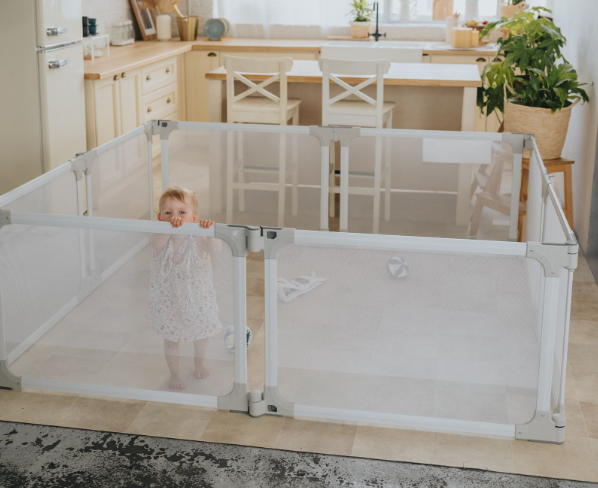
A TV or floor lamp can be very tempting for a child. A practical solution is safety playpens, which will create a safe play space.

3. Bathroom – a risky place because of water and slipping
Bathroom safety
Bathroom safety is essential, especially because of water and slippery surfaces.
Anti-slip mats
Using anti-slip mats in the bath or shower significantly reduces the risk of falling.
Lockable cabinets
Cleaning products and medicines should be stored out of a child's reach — ideally in lockable cabinets.
Protection against hot water
Tap locks or thermostatic faucets help prevent scalding.
Toilet seat and children's step stool
They help children practice independence, but they should always be stable and safe.
Important: Supervise your child in the bath, even when using anti-slip features.
4. Kitchen – a place where the most dangers lurk
Kitchen safety
Kitchen safety requires maximum attention. Sharp objects, hot surfaces, and chemicals pose a high risk.
Stove guard and safety locks
Use stove guards and safety locks on doors and drawers.
Lockable cabinets
Cleaning products and medicines should be kept out of a child's reach.
Table corner protection
The dining table is a common place for injuries—corner protectors help minimize the risk.
High chair with a 5-point harness
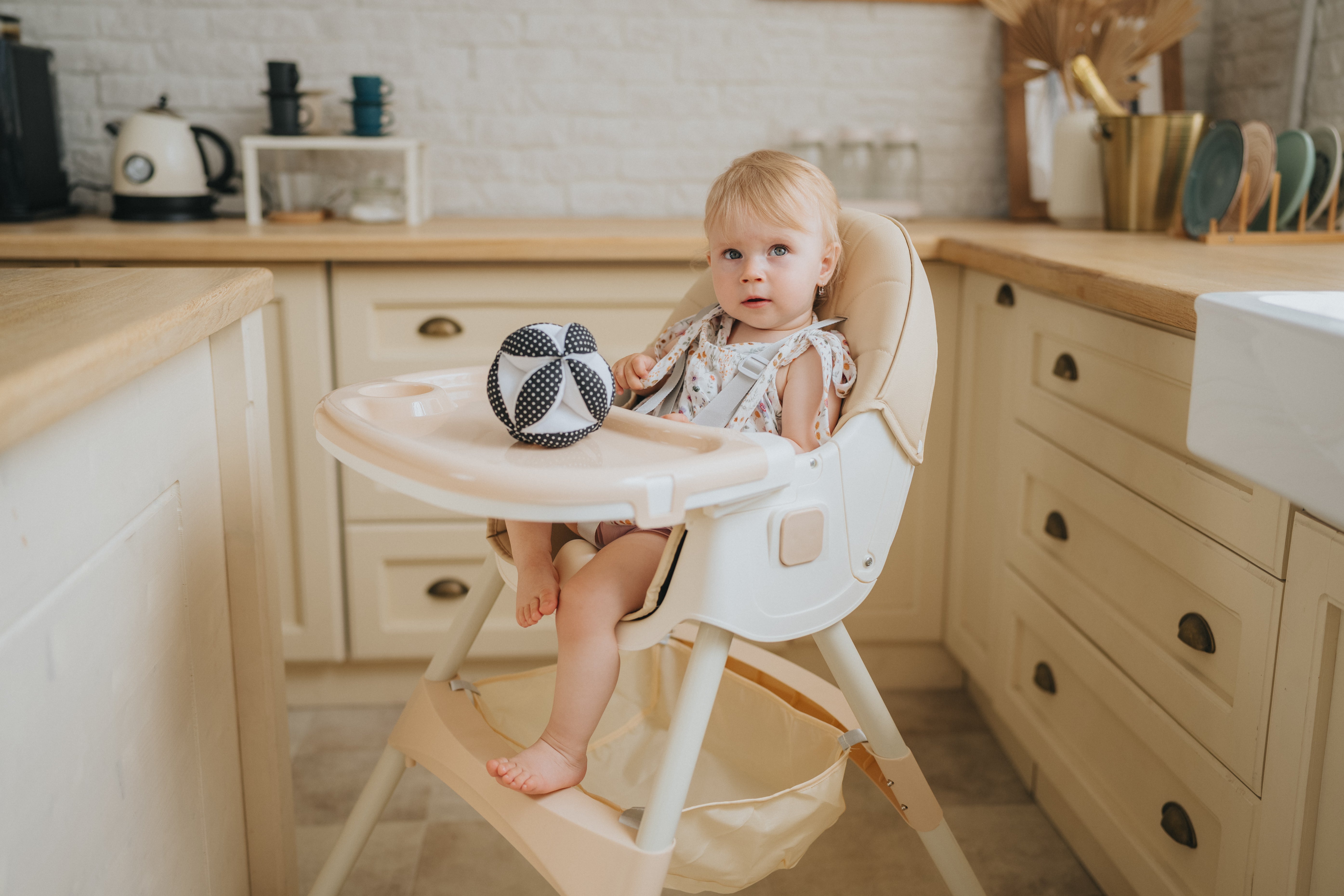
High-quality high chair must be stable and equipped with a safety belt.

Children's high chairs Monkey Mum meet the requirements for both safety and child comfort during mealtimes.
5. Stairs, doors, and passageways – prevent unwanted access
Stairs are one of the greatest risks. Installing a gate is a basic safety measure.
A properly chosen child safety gate should be sturdy, easy for an adult to operate, but secure against being opened by a child.

Childproof handle locks
Prevents the child from entering dangerous areas.
6. General safety equipment for the home
Regardless of the room, there are elements that should not be missing in any home with a small child:
- corner protectors
- socket covers
- childproof locks for cabinets and drawers
- smart cameras or baby monitors
A safe home is not about perfection, but about prevention and common sense. It is not about eliminating all risks—that is not even possible. The goal is to minimize those that can have serious consequences.
7. Frequently asked questions (FAQ)
Which rooms need to be secured first?
The kitchen, bathroom, and staircase have the highest priority. The risks here tend to be the most serious.
At what age should I start focusing on safety?
Ideally even before the baby is born. But no later than the moment they start rolling over and crawling.
How do I recognize a high-quality safety gate?
It should meet safety standards, be stable, have no sharp edges, and include a secure opening mechanism.
Creating a safe home for a child means thinking about everyday situations from their perspective. Safety in the bedroom, safety in the living room, safety in the bathroom, and safety in the kitchen are the basic pillars of child protection.
Investing in high-quality child safety gates, playpens, and childproof locks is not a needless expense, but peace of mind for parents. Because prevention is the best step toward a carefree childhood.

Write a comment
This site is protected by hCaptcha and the hCaptcha Privacy Policy and Terms of Service apply.